


By Ayomide Otitoju
Governor Babajide Sanwo-Olu has credited President Bola Ahmed Tinubu for laying the foundation of his leadership career, revealing that Tinubu’s decision to entrust him with multiple responsibilities during his tenure as Lagos Governor significantly shaped his path in public service.
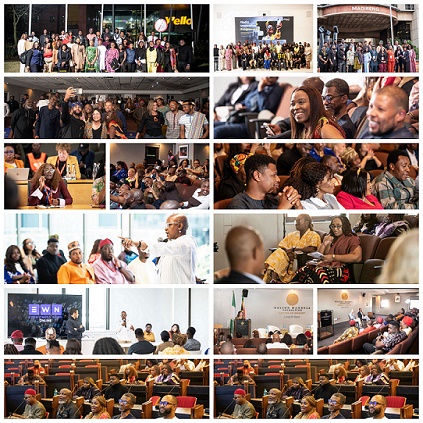
Sanwo-Olu shared these insights while addressing young Nigerians at the Lagos Leadership Summit, organised by the Lateef Jakande Leadership Academy (LJLA) and held at Konga Place, Lekki, under the theme “Transformative Leadership: Developing Responsive, Adaptive and Inclusive Models.”
Recounting his early days in government, Sanwo-Olu, a former investment banker, said his appointment in 2002 as Special Adviser on Economic Matters marked the beginning of his leadership evolution.
“I was appointed when former Governor, now President Tinubu, began laying the groundwork to modernise Lagos. I crisscrossed several portfolios — Transportation, Environment, Public Safety, Education, Revenue — and gave my best in each role without thinking about the future,” he said.
Sanwo-Olu noted that his performance in those early roles laid the groundwork for later appointments, including under former Governor Babatunde Fashola. Despite being deployed to ministries seen as “less rewarding,” he said the experiences honed his skills and prepared him for greater challenges.
“Leadership is not always about glamour. Sometimes, it’s about working in the trenches and transforming difficult spaces. Those ‘dry lands’ turned out to be the most fertile grounds for my growth,” he said, urging youths to remain resilient even in the face of setbacks.
He emphasized that failure should not define anyone’s journey, advising young leaders to use periods of disappointment to reassess and improve their capacities.
“It’s not how many times you fall that matters, but how many times you rise. Learn, unlearn, and relearn. Every small task is an opportunity to show the world what you can do.”
Also speaking at the summit, former Minister of Works and Housing, Babatunde Raji Fashola, delivered a keynote on “The Inclusion Imperative: Why No One Wins When Leadership Leaves People Behind.”
Fashola said that inclusivity and diversity must be core principles in leadership, pointing to Sections 14 to 19 of the Nigerian Constitution, which enshrine Federal Character as a foundation for national unity.
“Leaders don’t have to include everyone, but they must be seen as trying not to leave anyone behind. Town Hall meetings like this foster inclusion and give people the sense that their voices matter,” he said.
Traditional rulers, including the Olu of Warri, Ogiame Atuwatse III, Emir of Zazzau, Amb. Ahmed Nuhu Bamali, and the Oniru of Iru Kingdom, Oba Omogbolahan Lawal, also joined in panel discussions that explored how young Nigerians can channel their energy and knowledge to build a united nation.
LJLA Executive Secretary, Ayisat Agbaje-Okunade, hailed the summit’s turnout, noting its role in sparking collaborative conversations among emerging leaders.
“This summit bridges generational gaps by uniting thinkers, dreamers, and builders. It is through collaboration — not individualism — that we shape the future,” she said.
The Lagos Leadership Summit continues to serve as a platform for empowering youth with insights from seasoned leaders and royal fathers, fostering a culture of inclusive and transformative governance.