







By Ayomide Otitoju
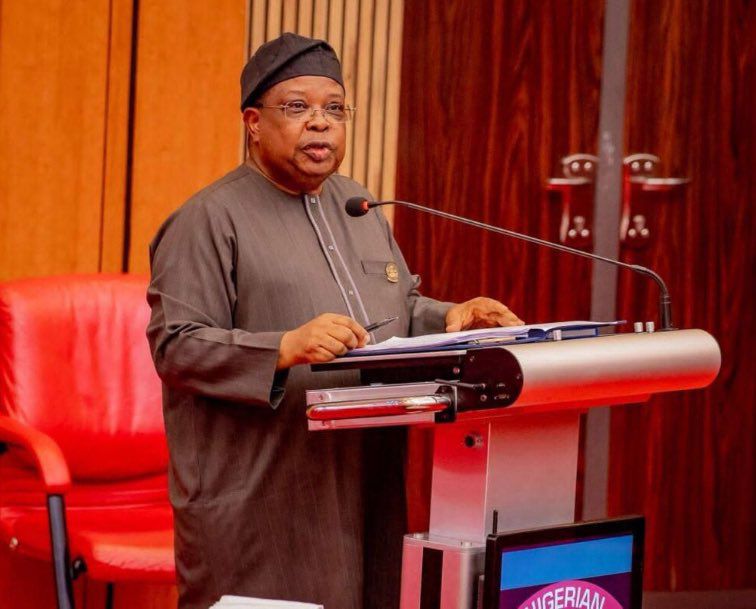
When Joseph Olasunkanmi Tegbe appeared before the Senate for his confirmation screening on May 6, 2026, he delivered a message that resonated across Nigeria’s power sector: he would not make promises he could not keep.
At a time when the electricity industry continues to grapple with chronic underperformance, liquidity constraints, infrastructure deficits, and declining public confidence, the statement signaled a leadership approach anchored on realism, accountability, and measurable outcomes.
Thirty days after assuming office as Minister of Power, early developments suggest that Tegbe is pursuing a strategy focused on coordination, execution, and institutional reform.
Nigeria’s electricity sector remains burdened by longstanding challenges, including inadequate gas supply, transmission bottlenecks, metering deficits, legacy debts, and governance concerns across the value chain. Although the country has an installed generation capacity of more than 13,000 megawatts, actual power supply continues to fall significantly short of national demand.
Since his confirmation, the minister has moved to strengthen collaboration among key institutions in the sector while engaging development partners to support reforms and operational improvements.
A central pillar of Tegbe’s approach has been improving alignment among critical agencies, including the Ministry of Power, Transmission Company of Nigeria (TCN), Nigerian Electricity Regulatory Commission (NERC), Rural Electrification Agency (REA), Niger Delta Power Holding Company (NDPHC), Nigerian Independent System Operator (NISO), Nigerian Bulk Electricity Trading Company (NBET), and FGN Power Holding Company.
The effort is aimed at reducing fragmentation and promoting coordinated implementation across the electricity value chain.
Addressing the sector’s liquidity challenges has also featured prominently in the minister’s early engagements. Discussions with international development institutions, including the World Bank and the African Development Bank, have focused on mobilising financial support to strengthen market stability, sustain electricity generation, and accelerate broader reforms.
The engagements are viewed as part of ongoing efforts to attract investment and reinforce confidence in the Federal Government’s reform agenda.
Beyond policy discussions, operational improvements have begun to emerge across generation and transmission infrastructure.
One of the most notable developments has been the revival of the Alaoji Power Plant in Abia State, which had remained largely inactive for years. Through interventions led by the Niger Delta Power Holding Company, generating units at the facility have been restored, adding capacity to the national grid and demonstrating the potential for recovering dormant energy assets.
Transmission infrastructure has also received attention, with new facilities energised at strategic substations, including Katampe in Abuja and installations in Ayede and Abeokuta under the Presidential Power Initiative. The upgrades are expected to enhance grid stability, increase transmission capacity, and strengthen network reliability.
Regulatory oversight and consumer protection have also gained renewed focus. The Nigerian Electricity Regulatory Commission recently directed electricity distribution companies to compensate eligible Band A customers affected by service shortfalls, reinforcing the principle that premium tariffs should be matched by corresponding service delivery.
Industry observers say the directive reflects a growing emphasis on accountability and performance-based regulation within the sector.
While one month may be insufficient to draw definitive conclusions about the long-term impact of the administration’s interventions, the early indicators point to a leadership style centred on execution rather than rhetoric.
The challenges facing Nigeria’s power sector remain significant, but recent developments suggest a deliberate effort to combine policy coordination, stakeholder engagement, infrastructure improvements, and regulatory accountability in pursuit of sustainable progress.
For a sector long characterised by delayed reforms and inconsistent implementation, Tegbe’s first month in office has been marked less by ambitious declarations and more by efforts to restore coordination, rebuild confidence, and lay the groundwork for lasting improvements in electricity supply.