







US President Donald Trump has ordered the Pentagon to substantially reduce joint military exercises with South Korea, describing the drills as “inappropriate and hostile” despite the exercises having already begun.
Trump cited his relationship with North Korean leader Kim Jong Un, saying he was unhappy that the United States had agreed to participate in the regular exercises with South Korea.
In a post on his Truth Social platform, Trump said the exercises were costly and sent an inappropriate signal to North Korea, which he described as having been “unthreatening and respectful” during his presidency.
Trump said it was too late to cancel the drills but that he had instructed Defence Secretary Pete Hegseth to “substantially reduce” their scale.
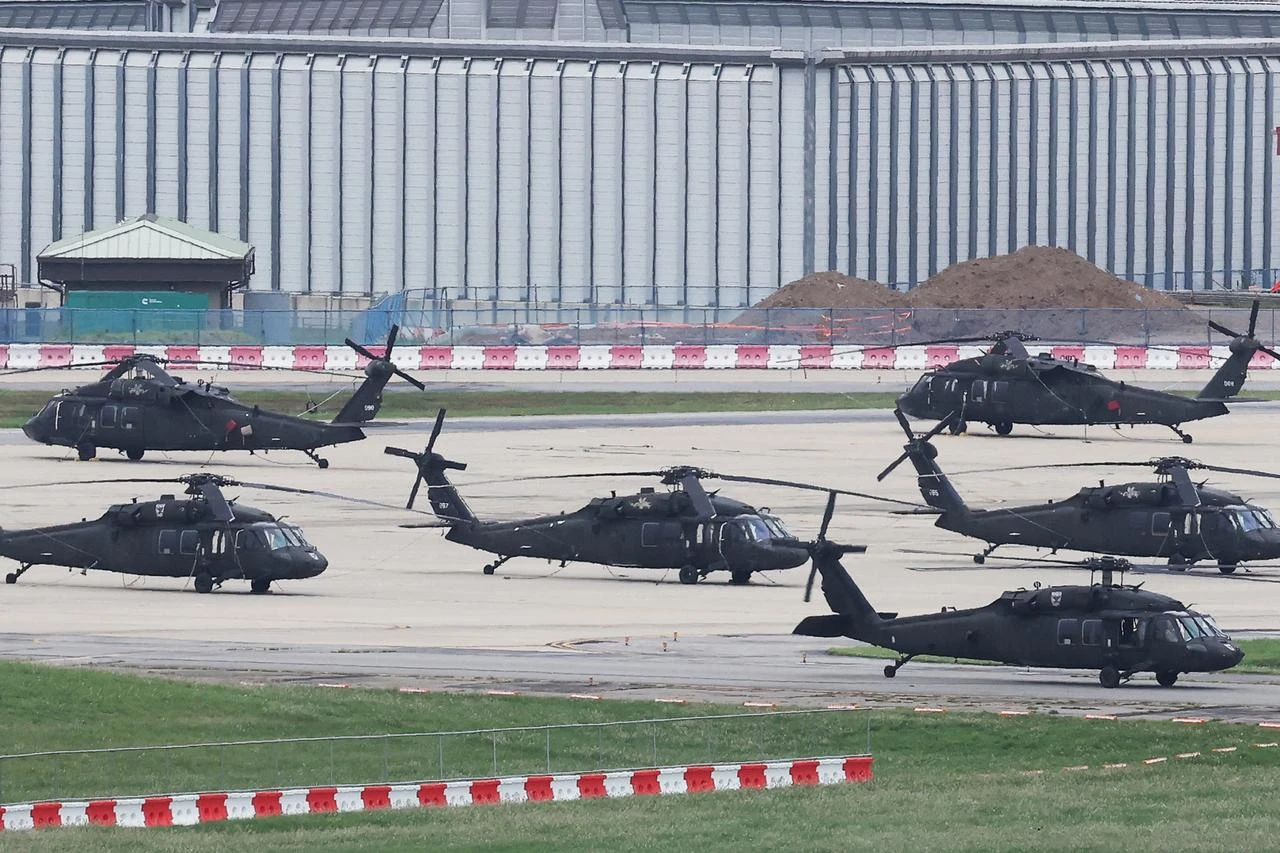
The 11-day Ulchi Freedom Shield exercises began on Monday as scheduled, despite Trump’s comments. The annual manoeuvres are designed to prepare US and South Korean forces for a potential conflict with North Korea.
Colonel Ryan Donald, spokesman for the US and South Korean Combined Forces Command, said the exercises would include simulations involving North Korean troops, including scenarios influenced by Pyongyang’s military cooperation with Russia.
South Korea’s Defence Ministry confirmed that the drills began as previously scheduled, while the presidential office said Seoul remained in close coordination with Washington.
The South Korean government also expressed hope that the relationship between Trump and Kim could help revive dialogue between Washington and Pyongyang.
North Korea has repeatedly condemned the joint military exercises and recently warned that it could respond to the drills with a “new level of deterrent”.
The exercises involve about 18,000 South Korean troops and US forces, with a strong focus on drone warfare, GPS disruption and cyberattacks.
The United States maintains about 28,500 troops in South Korea as part of its longstanding defence commitment to Seoul following the 1950-53 Korean War.
Trump’s latest criticism of the exercises has raised concerns about the future of the US-South Korea security alliance and Washington’s wider commitments in East Asia.
Leif-Eric Easley, a professor of international studies at Ewha Womans University in Seoul, warned that reducing the exercises could weaken alliance coordination and deterrence.
North Korea experts also suggested that Pyongyang was unlikely to consider the move sufficient, arguing that the country would attach greater importance to a complete cancellation of the drills.
The development comes amid growing concerns over North Korea’s nuclear and missile capabilities and its expanding military relationship with Russia.
China said maintaining peace and stability on the Korean Peninsula and pursuing a political settlement were in the common interests of all parties.
Meanwhile, Taiwan President Lai Ching-te said his government would propose record defence spending of more than $35 billion for 2027 amid continuing tensions with China and uncertainty over US security commitments in the region.


