




President Donald Trump’s second term has been marked by sweeping protectionist policies, mass deportations, and efforts to dismantle parts of the federal government. Since returning to the White House in January, the Republican president has deployed the National Guard in Democratic-run cities, confronted the media, and rolled back diversity and inclusion programmes.
Despite extensive diplomatic engagements, results have been mixed. Polls show rising public frustration over economic challenges, particularly the cost of living. Recent losses in local elections have placed Republicans in a vulnerable position ahead of next autumn’s midterms.
Middle East: Ceasefire Reached, but Fragile Stability Persists
U.S. diplomatic pressure helped broker a ceasefire between Israel and Hamas, two years after the Gaza war erupted. The agreement enabled the return of Israel’s remaining hostages and most deceased victims in exchange for Palestinian prisoners.
Humanitarian aid to Gaza has increased, though the UN says it remains insufficient. Progress on Trump’s broader peace plan, especially the proposed disarmament of Hamas, remains fraught. Israel has carried out several airstrikes in recent weeks in response to renewed Hamas attacks.
Tensions have also escalated across the region: Israel continues strikes against Hezbollah positions in Lebanon and, with U.S. support, conducted raids on Iranian nuclear sites during a 12-day conflict in June. In September, Israel launched an unprecedented operation targeting Hamas officials in Qatar.
Ukraine War: Washington Struggles to Shape a Path to Peace
Trump’s inconsistent stance on the Russia–Ukraine conflict has fuelled uncertainty in Kyiv, which fears diplomatic pressure to concede ground to Moscow. In February, Trump publicly rebuked President Volodymyr Zelensky, accusing him of risking a wider war.
A high-profile August summit in Alaska between Trump and President Vladimir Putin ended abruptly, with U.S. officials accusing Russia of lacking seriousness. A draft U.S. peace proposal circulated in November was viewed by Ukraine and European allies as leaning in Moscow’s favour.
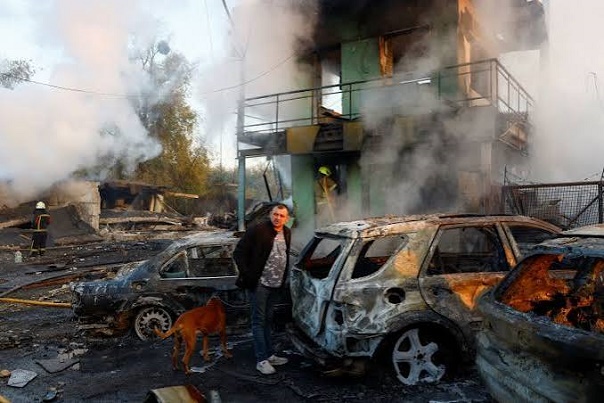
Meanwhile, Russian forces have continued grinding advances at steep human and financial cost, while launching record numbers of missile and drone strikes on Ukrainian cities.
Trade Policy: Tariff Escalation Shakes Global Markets
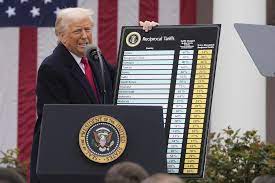
Trump has imposed successive rounds of tariffs on key industries — including steel, aluminium, and copper — sparking global trade disputes. Negotiations have led to agreements with the European Union and China, while talks with Mexico continue. Discussions with Canada were suspended after a provincial government funded an advertisement criticising U.S. tariff policy.
Facing domestic pressure over rising food prices, Trump lifted tariffs on selected food imports, including coffee and beef, in mid-November.
Religion: First American Pope Elected
On May 8, Cardinal Robert Francis Prevost was elected as Pope Leo XIV following the death of Pope Francis, whom he had long advised. The Chicago-born cleric, who spent nearly two decades as a missionary in Peru before obtaining citizenship, became the first American to lead the Catholic Church.
Pope Leo XIV has continued his predecessor’s focus on poverty, migration, and environmental concerns while assuring conservatives that reforms such as women’s ordination or recognition of same-sex marriage are not under immediate consideration.
Youth-Led Protests Sweep Developing Regions
Widespread youth movements across Asia, Africa, and Latin America have mobilised against poor living standards, censorship, and corruption. Their outcomes vary: Morocco has pledged reforms while prosecuting more than 2,000 demonstrators, while violent crackdowns in other countries transformed unrest into broader challenges to authority.
Protests contributed to the ouster of Nepal’s Prime Minister KP Sharma Oli and Madagascar’s President Andry Rajoelina. In Tanzania, demonstrations following elections were met with harsh repression.
A pirate flag from the Japanese manga One Piece — a skull wearing a straw hat — has become a cross-continental symbol of resistance, shared widely on social media.
AI Boom Raises Alarms Over Economic Risks and Misuse
Investment in artificial intelligence continues to surge, with global spending projected to reach $1.5 trillion in 2025 and $2 trillion in 2026, according to U.S. advisory firm Gartner. The enthusiasm briefly pushed chipmaker Nvidia’s valuation above $5 trillion.
But concerns over a speculative bubble are growing, alongside debates on AI-driven misinformation, rising copyright litigation, and the role of automation in mass layoffs.
OpenAI faces a lawsuit from the parents of a California teenager who died by suicide, alleging its chatbot provided harmful guidance. The company says it has strengthened parental controls, while California has enacted new legislation to regulate AI-powered chatbots.
Louvre Heist Sparks Global Security Debate
On October 19, thieves disguised as maintenance workers used a ladder to enter the Louvre Museum in Paris and escaped on scooters with Crown Jewels valued at €88 million. A diamond-encrusted crown was dropped during the getaway. Three suspects have been charged, but the stolen items remain missing, raising questions about security at the world’s most-visited museum.
U.S. Military Operations Escalate Tensions in Latin America
Since August, the United States has deployed naval and air assets off Latin America’s coast to combat drug trafficking. More than 20 strikes have targeted vessels Washington says were carrying narcotics, resulting in dozens of deaths.
The Justice Department insists the operations comply with international law, rejecting UN criticism that they amount to extrajudicial killings.
The campaign has heightened tensions with Venezuela, which accuses Washington of using anti-drug operations as a pretext to undermine President Nicolás Maduro. The U.S. alleges Maduro leads a criminal organisation and has offered a $50 million reward for his capture.
Extreme Weather Causes Devastation Across Continents
Severe climate-linked weather events have battered several regions.
Caribbean: Hurricane Melissa caused extensive destruction in Jamaica and widespread flooding in Haiti and Cuba.
Southeast Asia: The Philippines experienced three major typhoons — Ragasa, Kalmaegi, and Fung-wong — in two months; Vietnam suffered catastrophic storms, floods, and landslides.
Europe: Wildfires intensified amid extreme heat, with France’s Mediterranean coast enduring its worst blaze in 50 years.
United States: Lightning-triggered fires forced the closure of the Grand Canyon’s North Rim in mid-July for the remainder of the tourist season.
Scientists warn that such events are becoming more frequent and destructive due to human-driven climate change.


