



By Ayomide Otitoju
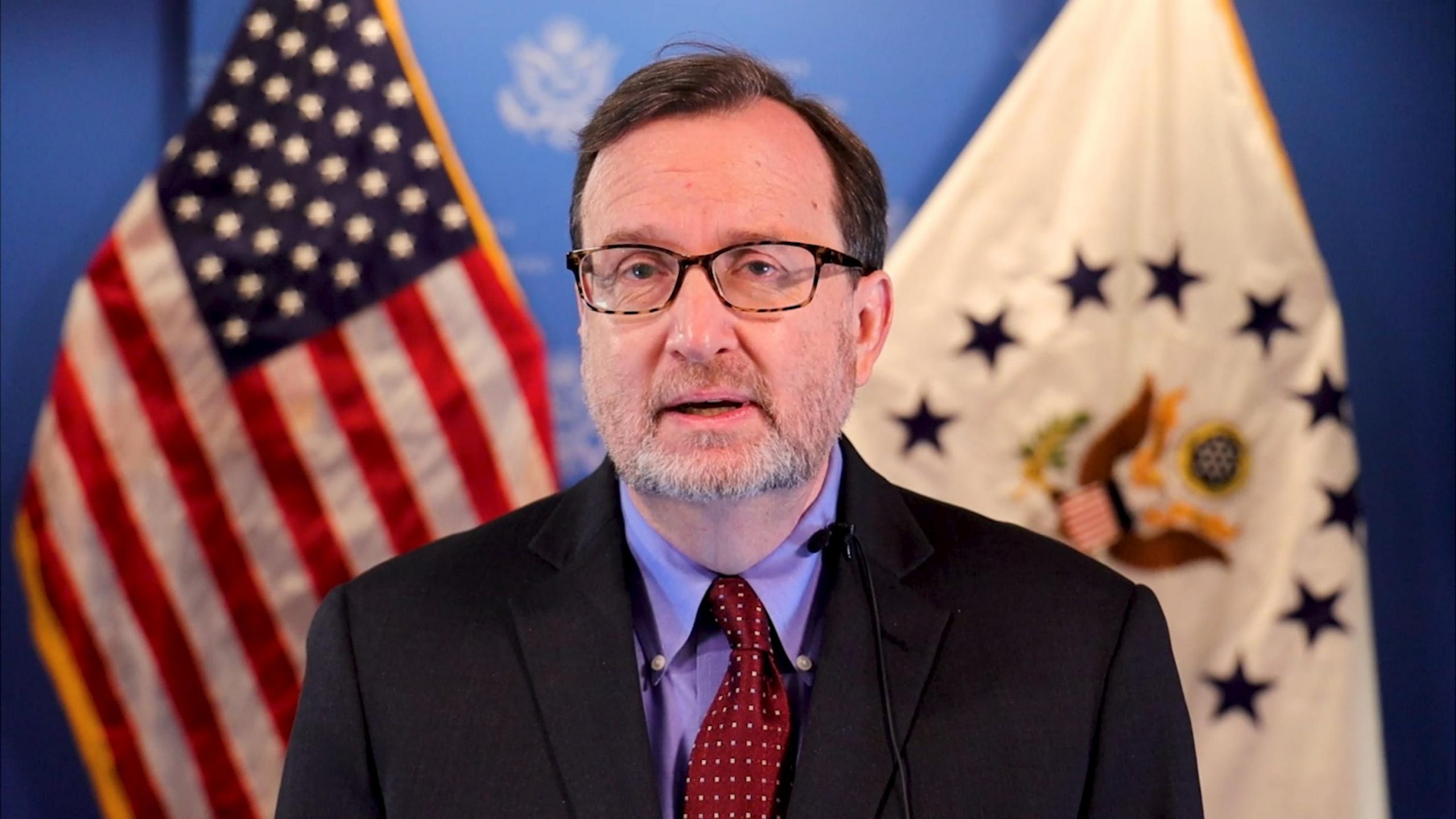
The United States Ambassador to Nigeria, Richard Mills, has refuted claims that the United States Agency for International Development (USAID) is funding Boko Haram or any other terrorist group.
Speaking at a meeting with members of the Nigeria Governors Forum in Abuja on Wednesday night, Mills stated that there is no evidence to support such allegations. He reaffirmed the U.S. government’s commitment to working with Nigeria to investigate any potential misuse of funds.
“There is absolutely no evidence of such diversion, and if we ever had evidence that any programme funding was being misused by Boko Haram, we would immediately investigate it with our Nigerian partners,” Mills said.
He emphasized that the U.S. has strict policies to prevent USAID funds or any assistance from agencies such as the Department of Defense and the State Department from being diverted to terrorist organizations.
“The United States stands firmly with Nigeria in its fight against Boko Haram. We have designated Boko Haram as a foreign terrorist organization since 2013, blocking its access to assets and enabling us to take action against its members,” he added.
U.S. Congressman’s Allegations Spark Senate Probe
The controversy arose after U.S. Congressman Scott Perry accused USAID of financially aiding terror groups, including Boko Haram, during a congressional hearing on February 13. Perry, a Republican from Pennsylvania, claimed that USAID’s $697 million annual budget may have inadvertently supported terrorist training camps through cash payments to Islamic schools (madrasas).
“Who gets some of that money? Your money, $697 million annually, plus the shipments of cash funds in madrasas—ISIS, Al-Qaeda, Boko Haram, ISIS Khorasan, and terrorist training camps,” Perry alleged.
The claims have drawn significant attention in Nigeria, prompting the Senate to summon top security officials, including National Security Adviser (NSA) Nuhu Ribadu, Director-General of the National Intelligence Agency Mohammed Mohammed, and Director-General of the Department of State Services (DSS) Oluwatosin Ajayi.
Senate President Godswill Akpabio announced the summons during a plenary session, stating that the security chiefs would appear before lawmakers in a closed-door meeting to verify the allegations.
The resolution was adopted following a motion by Borno South Senator Ali Ndume, who stressed the need to investigate the persistent security challenges in Nigeria.
“We need to determine the validity of these allegations because despite huge financial investments in counter-terrorism operations, Boko Haram remains a significant threat,” Ndume said.
The motion was seconded by Borno Central Senator Kaka Shehu, who noted that previous legislative investigations into Boko Haram had not yielded significant results. Bauchi Central Senator Abdul Ningi also stressed the urgency of compelling security agencies to clarify the matter.
The Senate’s decision reflects growing concerns over foreign financial flows and their potential impact on Nigeria’s counter-terrorism efforts.