






By Ayomide Otitoju
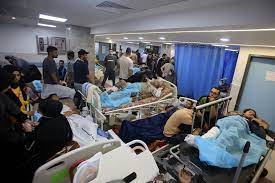
Israel’s intensifying military operations have pushed Gaza’s fragile health system to the verge of collapse, the World Health Organization (WHO) has warned, as hospitals shut down and essential services vanish under continued bombardment, displacement, and critical shortages.
In a statement on Friday, WHO revealed that only 19 of the Gaza Strip’s 36 hospitals remain operational — most under extreme duress — as four major facilities, including Kamal Adwan Hospital, Indonesian Hospital, Hamad Hospital for Rehabilitation and Prosthetics, and the European Gaza Hospital, were forced to suspend services within the past week. The suspensions follow escalating hostilities, attacks, and their proximity to evacuation zones.
WHO recorded 28 attacks on healthcare infrastructure during the past week alone, bringing the total to 697 attacks since October 2023. “At least 94% of Gaza’s hospitals have been damaged or destroyed,” the agency said.
Health Services Crippled Across Gaza
Of the 19 partially functioning hospitals, only 12 can provide general health services, while the rest offer only basic emergency care. The situation is compounded by a severe lack of medical supplies, fuel, water, and health workers, as well as persistent insecurity that hinders patient access and staff movement.
North Gaza has been particularly devastated, with Al-Awda Hospital now serving only as a trauma stabilization point. The hospital’s third and fourth floors were hit in separate attacks this week, injuring staff members, damaging its water supply, and destroying medical tents and supplies. WHO’s attempts to reach the hospital were thwarted due to insecurity.
The Indonesian Hospital has been inaccessible since 18 May due to ongoing military presence. WHO teams, blocked from delivering essential aid after multiple failed missions, had planned to bring food, water, and assess critical medical needs.
Kamal Adwan Hospital, previously home to North Gaza’s only treatment centre for severe acute malnutrition, ceased operations on 20 May following intense shelling nearby, forcing premature patient discharges and evacuations.
Southern Gaza Hospitals Overwhelmed
In the south, Nasser Medical Complex, Al-Amal, and Al-Aqsa hospitals are facing a surge of casualties amid fresh waves of displacement into Deir al Balah and Khan Younis. The European Gaza Hospital, struck on 13 May, remains shut down, cutting off critical care services such as neurosurgery, cardiology, and cancer treatment — none of which are available elsewhere in the Strip.
Across the Gaza Strip, just 2,000 hospital beds remain for more than 2 million people. WHO warned that at least 40 more beds are under threat in facilities located within newly declared evacuation zones, while 850 others are at risk if conditions worsen.
Cycle of Destruction
WHO has described the situation as a “systematic destruction” of Gaza’s health system. “Hospitals are rehabilitated and resupplied, only to be exposed to hostilities or attacked again. This destructive cycle must end,” the agency stated.
The renewed military activity and evacuation orders now threaten at least 1 hospital, 11 primary health centres, 13 medical points, and several other facilities within or near the evacuation zones.
A Call for Protection and Humanitarian Access
WHO reiterated its call for the protection of healthcare infrastructure and personnel, stressing that “hospitals must never be militarized or targeted.”
“Continued hostilities and military presence inhibit patients from accessing care, obstruct staff from providing care, and prevent WHO and partners from resupplying hospitals,” the agency warned.
Calling for unimpeded humanitarian access and large-scale aid delivery through all available routes, WHO echoed the UN’s Relief Chief in asserting that “the UN and its partners have a clear, principled, and effective plan to deliver aid with safeguards against diversion.”
Despite the worsening situation, health workers, including national and international emergency teams, continue to provide lifesaving care under fire. WHO praised their courage and commitment, but warned that without urgent international action, Gaza’s healthcare system may be beyond saving.


