







By Ayomide Otitoju
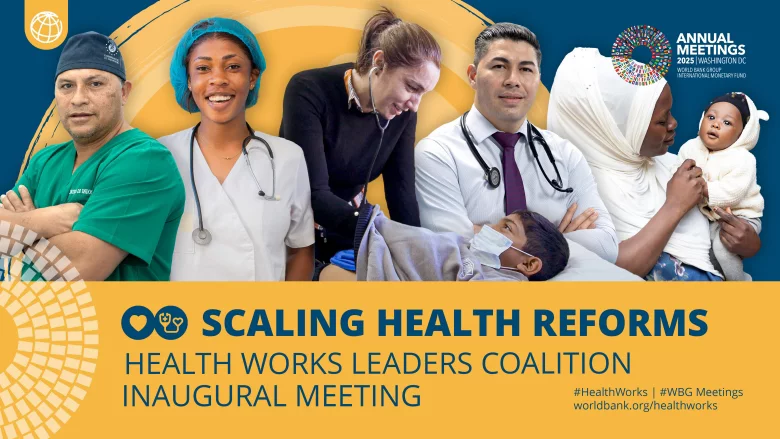
The World Bank Group, the Government of Japan, and the World Health Organization (WHO) have officially launched the Health Works Leaders Coalition, a global alliance aimed at advancing investments in health systems as a catalyst for economic growth, job creation, and stronger resilience.
The coalition brings together health and finance ministers, philanthropic foundations, business leaders, global health agencies, and civil society representatives to champion reforms that make quality healthcare more accessible and sustainable worldwide.
Central to the Health Works initiative — a broader effort led by the World Bank and its partners — the coalition seeks to help countries provide quality, affordable healthcare to 1.5 billion people by 2030. Rather than serving as a funding mechanism, the coalition will focus on coordinating high-impact actions, mobilizing domestic and international investment, and aligning development partners behind government-led priorities.
During its inaugural meeting, held alongside the World Bank Group Annual Meetings, it was announced that 21 countries will begin developing National Health Compacts — comprehensive, government-led agreements outlining reform agendas, investment priorities, and mechanisms for shared accountability to expand access to affordable healthcare.
These reforms will vary by country — from expanding free health checkups and health insurance coverage in Indonesia to developing a pharmaceutical strategy in Mexico projected to create 60,000 jobs through private sector partnerships. The first compacts will be formally launched at the UHC High-Level Forum in Tokyo in December 2025.
Japan also unveiled the inaugural UHC Knowledge Hub in Tokyo, which will support health policymakers from eight developing countries through capacity-building and knowledge exchange.
“Strengthening health systems in developing countries depends on cultivating health financing expertise within both health and finance ministries,” said Atsushi Mimura, Japan’s Vice Minister of Finance for International Affairs. “Through targeted training, the UHC Knowledge Hub will share Japan’s experience to build institutional capacity and support tangible reforms.”
Dr. Tedros Adhanom Ghebreyesus, WHO Director-General, noted that while global aid reductions have strained health services, many countries are now taking greater ownership of their systems. “We must support countries to mobilize domestic resources, strengthen primary care, and protect the poorest from financial hardship,” he said.
World Bank Group President Ajay Banga emphasized that the coalition represents both a health and economic initiative. “Our goal is ambitious — to deliver quality, affordable health services to 1.5 billion people by 2030. No single institution or government can achieve that alone,” he said. “If we get this right, we can make a real impact — improving health, transforming lives, strengthening economies, and creating jobs.”


