





By Ayomide Otitoju
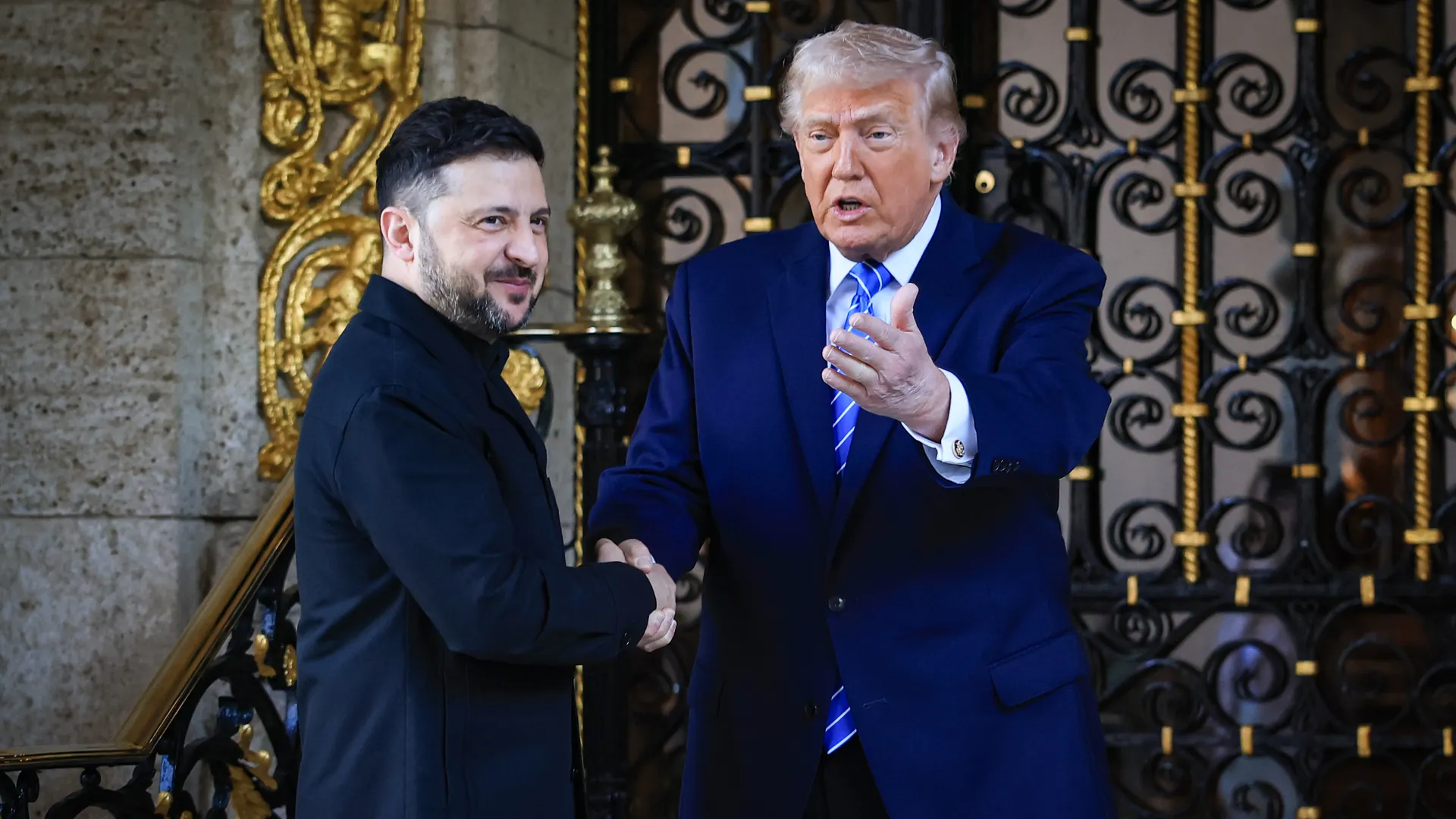
Ukrainian President Volodymyr Zelensky is scheduled to meet former US President Donald Trump on Sunday in Florida, as he seeks Washington’s endorsement for a new proposal aimed at ending the nearly four-year war with Russia.
The meeting, set to take place at Trump’s Mar-a-Lago residence at 1:00 pm (1800 GMT), follows weeks of intensive negotiations between the United States and Ukraine that produced a 20-point peace plan. The proposal, however, has not received Moscow’s approval and comes amid a massive Russian missile and drone assault on Kyiv.
According to the White House, the talks will mark the first face-to-face encounter between the two leaders since October, when Trump declined Zelensky’s request for long-range Tomahawk missiles.
Speaking during a stopover in Canada on Saturday, Zelensky said he expected the discussions to be “very constructive,” adding that Russia’s latest attack on the Ukrainian capital demonstrated President Vladimir Putin’s unwillingness to pursue peace.
“This attack is again Russia’s answer to our peace efforts. It clearly shows that Putin does not want peace,” Zelensky said.
While in Canada, the Ukrainian leader also held a conference call with European leaders, who, according to German Chancellor Friedrich Merz, pledged full support for Ukraine’s peace initiative. European Commission President Ursula von der Leyen and European Council President Antonio Costa reaffirmed that the European Union’s backing for Ukraine would remain unwavering and vowed to sustain pressure on the Kremlin.
Russia, however, has accused Ukraine and its European allies of undermining an earlier US-brokered peace effort. Russian Foreign Minister Sergei Lavrov told state news agency TASS that while Moscow would continue engaging with American negotiators, Europe had become “the main obstacle to peace” following a change in the US administration. He accused European leaders of preparing for war with Russia and disregarding both Ukrainian and European civilian interests.
Trump has so far remained non-committal about the new proposal. In an interview with Politico on Friday, he said Zelensky “doesn’t have anything until I approve it,” adding that he would assess the plan during their meeting.
The proposed framework would halt hostilities along current front lines and could involve Ukrainian troop withdrawals in parts of the east to create demilitarized buffer zones. While it represents Kyiv’s most explicit acknowledgement yet of potential territorial concessions, the plan does not include withdrawing from the roughly 20 percent of the eastern Donetsk region still under Ukrainian control, a key demand from Moscow.
Trump has made ending the wars in Ukraine and Gaza central to his self-described second term as a “president of peace,” though he has repeatedly expressed frustration over the difficulty of securing a ceasefire in Ukraine.
Zelensky said security guarantees would be a central issue during the Florida talks, stressing that assurances must accompany any end to the war to prevent renewed Russian aggression. He also reiterated Ukraine’s need for continued US and European support, particularly in funding, weapons and drone capabilities.
During Zelensky’s visit, Canadian Prime Minister Mark Carney announced CAN$2.5 billion (US$1.82 billion) in new economic assistance to support Ukraine’s post-war reconstruction.
Meanwhile, Russia’s latest assault—reportedly involving about 500 drones and 40 missiles—crippled power and heating supplies for hundreds of thousands of residents in the Kyiv region amid freezing temperatures. In southern Ukraine, authorities in Kherson said Russian strikes also left parts of the city without electricity.


