





By Ayomide Otitoju
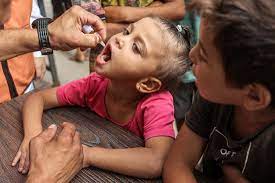
Over 558,000 children under the age of 10 have been vaccinated against polio in the Gaza Strip during the first round of a three-phase emergency vaccination campaign conducted from September 1 to 12, 2024. The campaign, organized in response to a recent outbreak, administered the novel oral polio vaccine type 2 (nOPV2) to 558,963 children.
The 12-day effort involved extensive coordination and the mobilization of teams working across health facilities, outreach posts, and mobile units. Teams also reached displaced families in shelter homes, tents, and camps, raising awareness about the importance of vaccination. To ensure safety, a daily nine-hour humanitarian pause was agreed upon, allowing communities and health workers to carry out the vaccinations safely.
“Health and community workers have demonstrated incredible resilience, operating this campaign at an unprecedented scale and speed under Gaza’s harsh conditions. Swift action by the Global Polio Eradication Initiative, from detecting the virus to launching the vaccination campaign, underscores the program’s effectiveness,” said Dr. Richard Peeperkorn, WHO Representative for the occupied Palestinian territory (oPt). “The campaign brought not only vaccines but also moments of calm during humanitarian pauses. As we prepare for the next round in four weeks, we hope these pauses will hold, showing what’s possible when peace is given a chance.”
Jean Gough, UNICEF Special Representative in the State of Palestine, added: “It was critical that this ambitious campaign was carried out quickly, safely, and effectively to protect children in Gaza and neighboring countries from the poliovirus. The progress made is encouraging, but we still have work to do. We call on all parties to ensure the next round can be completed for the sake of children everywhere.”
Despite challenges such as destroyed infrastructure, limited healthcare workers, and fuel shortages, families in Gaza showed high participation in the campaign. The initial target was to vaccinate 640,000 children, but that number may have been overestimated due to constant population movements and the ongoing conflict. Monitoring teams are being deployed to assess the coverage of the first round and ensure that all eligible children receive the vaccine.
A second round is planned in four weeks, aiming to provide a follow-up dose to halt the spread of the virus. WHO, UNICEF, and UNRWA are calling on all parties involved in the conflict to commit to further humanitarian pauses to ensure unimpeded access for vaccination teams.
In the long term, international organizations stress the need for a lasting ceasefire, allowing families in Gaza to begin the process of healing and rebuilding their lives.


