






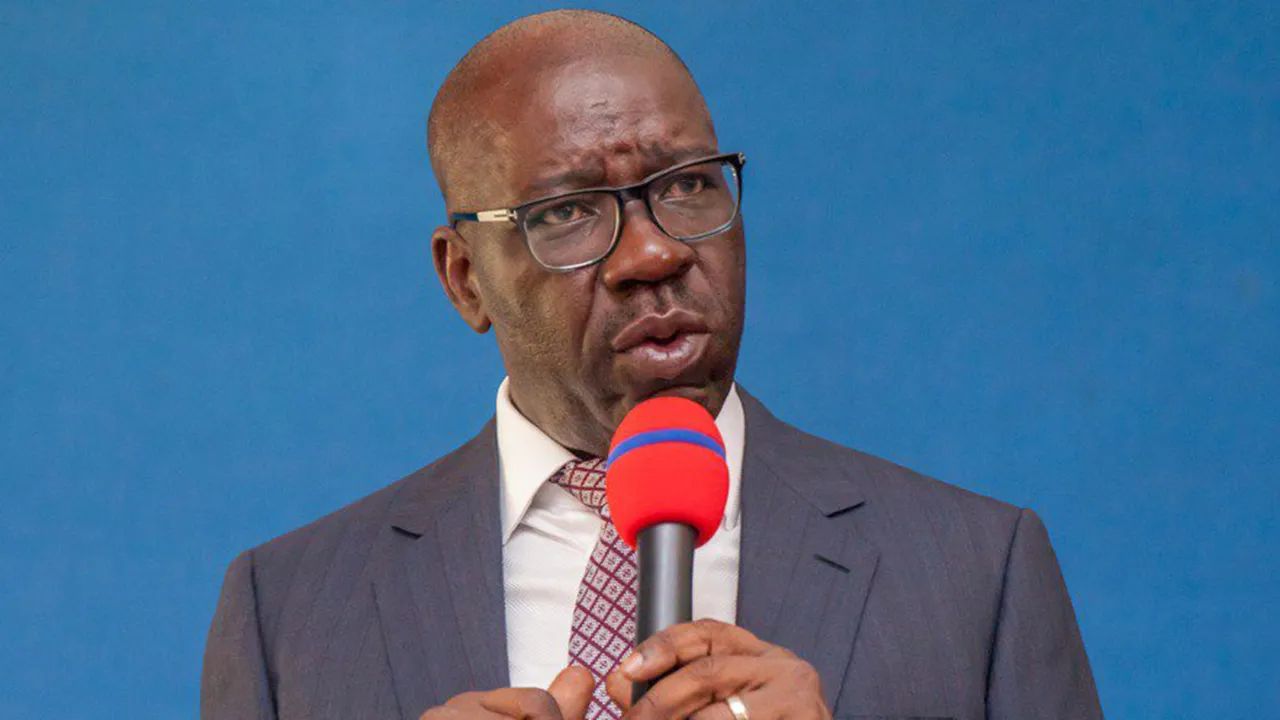
Edo State Governor, Godwin Obaseki, has signed into law a revised supplementary budget of ₦450 billion. The signing took place on Tuesday at the Executive Council Chamber of the Government House in Benin City.
Governor Obaseki, while signing the budget, announced that the government has allocated approximately ₦5 billion to support the growth of small businesses in the state. He expressed his gratitude to the Speaker and members of the Edo State House of Assembly (EDHA) for their prompt approval of the revised budget.
“I want to express my profound gratitude and appreciation to Mr. Speaker and members of the Edo State House of Assembly for the honor you have given us by promptly and expeditiously approving the revised supplementary budget,” Obaseki said.
He explained that the revision was necessary due to changes in the economic landscape. “Last week, I met with Mr. Speaker and the appropriation committee to inform them of the need for a revision of the budget they had earlier approved. We had to request a supplementary allocation for the existing 2024 budget. After proper review and analysis, we realized that the 2023 budget was around ₦225 billion, set at an exchange rate of approximately ₦750.”
Obaseki emphasized the importance of adjusting the budget to align with the state’s economic goals. “It only follows common sense that if we must grow the economy of Edo State, our budget size needed to be doubled. What we have done in Edo is not just to double the budget size but to ensure more efficiency in its implementation.”
The governor highlighted the improved efficiency and increased focus on capital expenditure in the revised budget. “This revised budget is different because we are almost certain of achieving a 95 percent performance rate. At the halfway point of the year, we are nearing 100 percent performance. We don’t anticipate any significant changes by the end of the year.”
Obaseki pointed out that the revised budget prioritizes capital expenditure, which now accounts for 57 percent of the total budget, compared to 55 percent in the previous allocation. “This shift ensures that more resources are directed toward the development and welfare of the Edo people,” he noted.
He also mentioned that the revision addresses concerns raised during recent citizens’ protests across Nigeria. “We used this opportunity to address the deteriorating welfare of citizens, an issue that was highlighted during the last citizens’ protest in Nigeria. Edo joined Nigerians in voicing out these concerns,” Obaseki added.


