





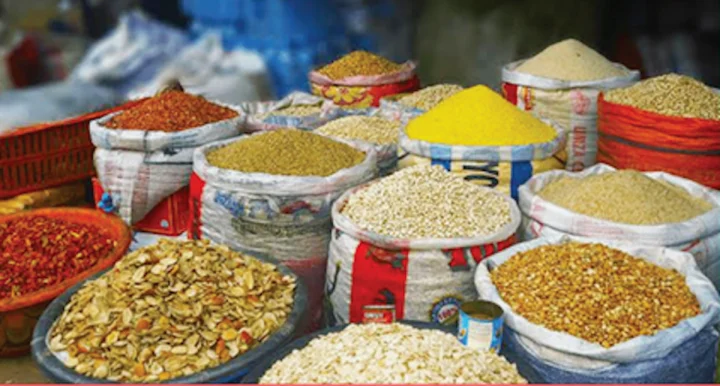
Nigerian households are bracing for a significant increase in spending on food, driven by the nation’s soaring inflation rate, according to a recent survey conducted by the Central Bank of Nigeria (CBN). The survey, which ran from July 22 to 26, 2024, revealed that households expect to allocate a substantial 54.9% of their income to food purchases over the next six months.
The findings come as the National Bureau of Statistics (NBS) reports an inflation rate of 33.40%, with food inflation exceeding 40%. The CBN’s Household Expectation Survey, which sampled 1,665 households across Nigeria’s 36 states and the Federal Capital Territory, indicated that many Nigerians plan to cut back on non-essential items as they grapple with the economic challenges posed by rising prices.
“Consumers plan to spend a significant portion of their income on food and other household items, education, transportation, electricity, and medical expenses in the coming months,” the CBN survey noted.
In contrast, the survey revealed that households have little intention to spend on big-ticket items such as housing, cars, or household appliances, nor do they plan to invest in property or savings. The survey suggests that many Nigerians are likely to deplete their savings or resort to borrowing to cope with the financial pressures.
Regarding inflation perception, a staggering 83.7% of respondents believe that the current level of inflation is high, with businesses slightly more optimistic than households. Large businesses, in particular, expressed concerns, with 70.8% of respondents in this group indicating that inflation was excessively high.
The survey also touched on the naira’s performance, noting that while many expect the currency to continue depreciating over the next three months, there is optimism that it will strengthen by January 2025. The naira recently plunged to ₦1,639 per US dollar, marking it as the world’s worst-performing currency after the Lebanese pound.
Despite the bleak economic outlook, the CBN remains hopeful that its monetary policy decisions will help stabilize the naira and the broader economy by early 2025.