




By Ayomide Otitoju
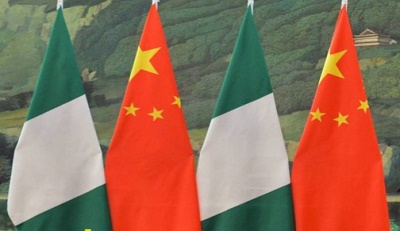
Nigeria has signed a $3.3 billion deal with China to develop the Brass Industrial Park and Methanol Complex, a project expected to boost the country’s industrial output and create thousands of jobs. The agreement was disclosed by the Ministry of Finance in a statement signed by its Director of Information and Public Relations, Mohammed Manga, on Friday.
The signing took place during the 2024 Forum on China-Africa Cooperation (FOCAC) and the inaugural China-Nigeria Economic Cooperation and Trade Conference, where both nations committed to deepening their economic ties and advancing bilateral cooperation.
“In a landmark event chaired by the Honourable Minister of Finance and Coordinating Minister of the Economy, Mr. Wale Edun, Nigeria and China have reaffirmed their commitment to fostering sustainable development and strengthening bilateral ties,” the statement read.
Mr. Edun, in his keynote address, emphasized the importance of South-South cooperation, highlighting its crucial role in Nigeria’s sustainable development goals. He also guided discussions focusing on infrastructure, energy, and industrial development—sectors seen as vital to President Bola Ahmed Tinubu’s economic agenda.
A major highlight of the conference was the signing of the $3.3 billion agreement for the Brass Industrial Park and Methanol Complex. This transformative project is set to significantly enhance Nigeria’s industrial capacity and generate essential employment opportunities.
Infrastructure development was a central theme of the discussions, with both nations pledging to collaborate on key projects such as roads, bridges, and energy systems. These initiatives are expected to accelerate Nigeria’s industrialization and contribute to long-term economic growth.
The two countries also agreed to enhance financial and security cooperation, focusing on combating money laundering and financial crimes through increased intelligence sharing.
In his remarks, Mr. Edun reiterated President Tinubu’s commitment to creating a business-friendly environment that attracts foreign investments. He stressed that Nigeria’s economic reforms, under the “Renewed Hope Agenda,” are designed to harness domestic resources and international partnerships, such as this one with China.
The conference concluded with a strong commitment from both nations to ongoing engagement, open dialogue, and reinforced collaboration, laying the groundwork for transformative growth and sustainable development. As Nigeria and China embark on this partnership, the development of the Brass Industrial Park and Methanol Complex is seen as a critical step in achieving Nigeria’s economic objectives while advancing China’s Belt and Road Initiative.


