






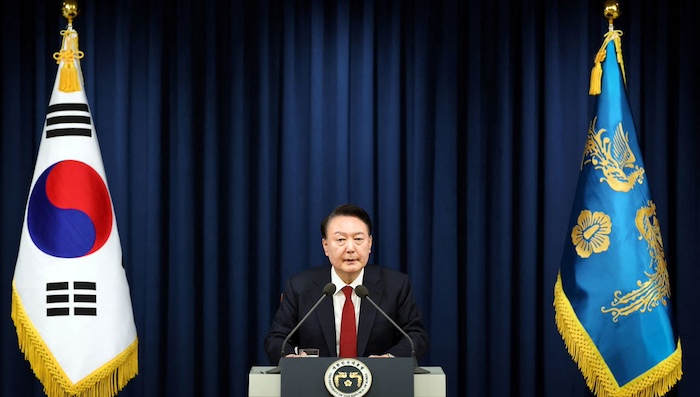
South Korean authorities imposed travel bans on additional top officials on Tuesday, deepening the fallout from President Yoon Suk Yeol’s failed attempt to impose martial law, according to Yonhap News Agency.
The bans, which now include Korean National Police Agency Commissioner General Cho Ji-ho and two other senior police officials, come a day after Yoon himself was barred from leaving the country. These developments follow allegations of insurrection against the president and his close allies, many of whom share connections from their school days.
Resignation Talks Amid Political Turmoil
Yoon’s People Power Party (PPP) is reportedly drafting a “resignation roadmap” that could see him step down as early as February or March, with elections to follow. The plan is seen as an effort to stave off a renewed impeachment push by the opposition, which is calling for Yoon’s removal after his controversial suspension of civilian rule last week.
The president’s martial law decree sent shockwaves through the country, with special forces and helicopters deployed to parliament before lawmakers successfully pressured Yoon to rescind the order.
Legal Proceedings and Arrests
Former Defense Minister Kim Yong-hyun was detained on Sunday and formally charged on Monday with insurrection-related crimes, including “engaging in critical duties during an insurrection” and “abuse of authority to obstruct the exercise of rights.”
Kim is the first official to face legal proceedings linked to the crisis. A Seoul court is set to rule on his arrest warrant later Tuesday. In a statement through his lawyers, Kim took full responsibility, saying, “All responsibility for this situation lies solely with me,” and apologized to the public, emphasizing that his subordinates were following orders.
Growing Public Unrest
Public anger over Yoon’s actions remains high, with tens of thousands participating in candlelight vigils across South Korea, including outside parliament in Seoul. The president narrowly survived an impeachment vote on Saturday after PPP lawmakers staged a walkout, denying parliament the necessary two-thirds majority to pass the motion.
The PPP’s potential resignation roadmap is expected to offer two scenarios: Yoon stepping down in February with elections in April, or resigning in March with a vote in May. Opposition leaders have condemned the plan as a “second coup,” accusing the party of attempting to subvert democratic processes.
As the crisis unfolds, South Korea faces unprecedented political instability in what had been considered a robust democratic system.