








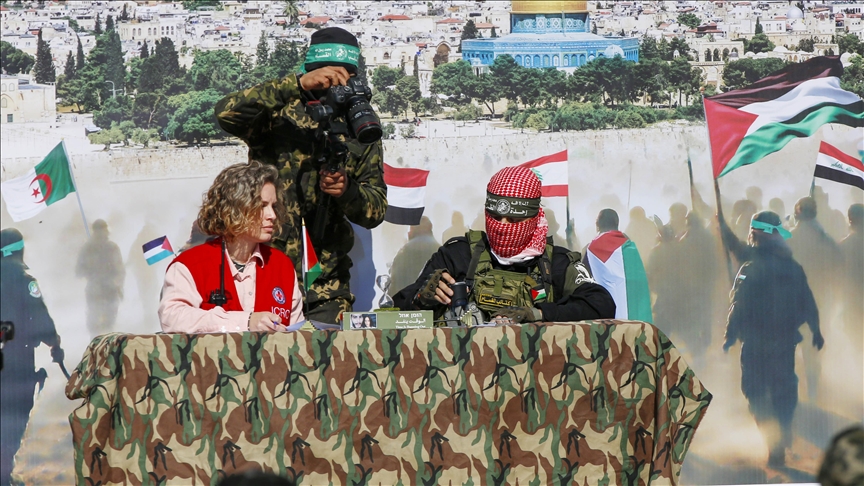
Hamas has announced that it will release six living Israeli hostages and return the bodies of four deceased captives as part of the first phase of the Gaza ceasefire agreement, which remains in effect despite ongoing tensions.
The truce, which took effect on January 19, follows more than 15 months of conflict sparked by Hamas’s October 7, 2023 attack on Israel. Under the current deal, 33 Israeli hostages were set for release, with 19 freed so far in exchange for over 1,100 Palestinian prisoners. Of the remaining 14 hostages, Israel has confirmed that eight are dead.
Hostage Release Timeline
Speaking in a televised address, Hamas negotiator Khalil al-Hayya confirmed that the group would release six Israeli prisoners on Saturday, February 22, as agreed in the first phase of the deal. Additionally, four bodies will be returned on Thursday, February 21, with Israel set to release corresponding prisoners in return.
The Israeli government later confirmed these arrangements, with Prime Minister Benjamin Netanyahu’s office stating that four more bodies would be handed over next week.
A Palestinian source close to the negotiations said mediators pushed for the latest releases to create a positive atmosphere and strengthen prospects for maintaining the fragile ceasefire.
Uncertain Future of Ceasefire
The first phase of the truce is set to expire on March 1, with negotiations on a longer-term settlement yet to begin. While both sides have accused each other of violating the ceasefire, the agreement has largely held.
The ceasefire process has also been strained by controversial proposals from U.S. President Donald Trump, who has suggested relocating Gaza’s population. The idea has drawn widespread condemnation, including from Saudi Arabia, Egypt, Jordan, Qatar, and the United Arab Emirates, who are set to meet on Friday to discuss Gaza’s future and reconstruction efforts.
After the Saudi-hosted talks, Egypt will convene an extraordinary Arab League meeting on Gaza on March 4, where Trump’s relocation plan is expected to be a key issue. Both Egypt and Jordan have firmly rejected any proposal to resettle displaced Gazans in their territories.
For many Palestinians, forced displacement evokes memories of the 1948 “Nakba”, when hundreds of thousands were forced to flee their homes following Israel’s creation.
Israel Demands Gaza’s Demilitarization
Meanwhile, Israel is pushing for Gaza’s complete demilitarization as part of a longer-term settlement. Israeli Foreign Minister Gideon Saar insisted on Tuesday that Hamas and all armed groups must be removed from Gaza, saying Israel would not accept their continued presence in the territory.
Saar also confirmed that Israel will begin negotiations this week on a second phase of the ceasefire, aimed at ending the war permanently.
Qatar, a key mediator in the Gaza conflict, has emphasized that any post-war governance of Gaza must be determined by Palestinians themselves.
Humanitarian Crisis in Gaza
Qatari Foreign Ministry spokesperson Majed al-Ansari stated that humanitarian aid into Gaza remains insufficient, warning that the territory’s future must be decided by Palestinians, not external powers.
According to an AFP tally of Israeli figures, Hamas’s 2023 attack on Israel killed 1,211 people, mostly civilians. In response, Israel launched a retaliatory campaign that has killed at least 48,291 people in Gaza, according to Hamas-run health ministry figures cited by the UN.
As negotiations for the next phase of the ceasefire continue, the fate of thousands of Palestinians still held in Israeli prisons and the future governance of Gaza remain contentious points.


