








By Ayomide Otitoju
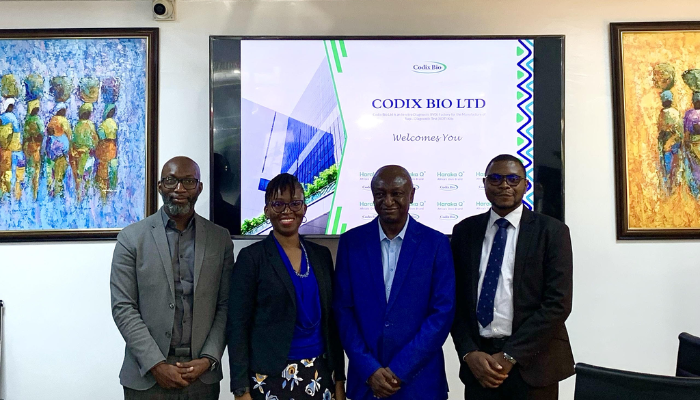
In a major boost for local health innovation in Africa, the World Health Organization (WHO) and the Medicines Patent Pool (MPP) have announced a sublicensing agreement with Nigerian health tech firm, Codix Bio, to begin the local production of rapid diagnostic tests (RDTs) using technology from global diagnostics giant, SD Biosensor.
The move is expected to enhance equitable access to affordable diagnostic tools in low- and middle-income countries (LMICs) by strengthening Africa’s regional manufacturing capacity. Codix Bio will initially manufacture RDTs for HIV, with potential expansion to tests for malaria, syphilis, and other diseases. The tests can produce results within 20 minutes without needing additional equipment, making them ideal for resource-limited settings.
“This agreement is a milestone in localizing essential health technologies,” said Dr. Yukiko Nakatani, WHO Assistant Director-General for Access to Medicines and Health Products. “It supports global health goals, including universal health coverage and pandemic preparedness.”
Charles Gore, Executive Director of MPP, echoed this sentiment, saying: “Today marks a significant step in reshaping global diagnostic supply chains through voluntary licensing and coordinated technology transfer.”
Codix Bio becomes the first sublicensee under a non-exclusive license agreement signed between MPP and SD Biosensor in December 2023 under WHO’s COVID-19 Technology Access Pool (C-TAP), now expanded into the Health Technology Access Programme (HTAP).
Hyo-Keun Lee, Vice Chairman of SD Biosensor, highlighted the importance of the collaboration: “This partnership enables Codix Bio to address local health priorities and showcases how technology transfer can build sustainable manufacturing ecosystems.”
Speaking on the development, Codix Bio CEO Sammy Ogunjimi described the agreement as “a defining moment” for health-tech in Africa. “We are committed to producing high-quality rapid tests that will improve health outcomes not just in Nigeria, but across the continent.”
HTAP will support Codix Bio with training, regulatory guidance, and product adoption strategies. WHO also revealed that evaluations are underway for a potential second sublicensee.
The agreement comes amid a broader push to reduce Africa’s reliance on imported health products—a vulnerability exposed during the COVID-19 pandemic. Institutions such as Africa CDC, the Global Fund, and Unitaid are backing efforts to improve regional supply resilience.


