








By Ayomide Otitoju
The Global Agriculture and Food Security Program (GAFSP) has approved its first allocation from a new private sector financing window, providing $14 million in de-risking capital to the African Development Bank Group (AfDB) to catalyze $200 million in private investment aimed at boosting food security in low-income African countries.
The funding, part of GAFSP’s Business Investment Financing Track launched in 2024, combines grants and concessional finance with multilateral development bank funding to attract private capital for smallholder farmers, agribusinesses, and start-ups across the agriculture value chain.
This initial allocation will establish the Agro-Inputs Risk Sharing Facility, a $200 million fund hosted by the AfDB. Of the total, $10 million will be used as de-risking capital, while an additional $4 million grant will provide technical assistance to spur private lending to agricultural SMEs in Ethiopia, Uganda, Tanzania, Malawi, and Zambia.
The facility, implemented in partnership with the African Trade & Investment Development Insurance (ATIDI), will offer guarantees to local financial institutions, reducing risk and encouraging banks to extend credit to smallholder farmers and agro-input suppliers.
Natasha Hayward, GAFSP Program Manager, said the initiative marks a major step in addressing long-standing financing challenges for smallholder farmers.
“By blending donor funds with multilateral and commercial finance, each GAFSP dollar will leverage several more in private investment, multiplying the impact on food security and climate resilience,” she said.
Philip Boahen, AfDB Coordinator for GAFSP, added that the facility would help strengthen Africa’s food systems from production to market access.
“By targeting agro-input dealers and smallholder farmers, this facility strengthens the entire value chain, making Africa’s food systems more resilient to environmental and market shocks,” he said.
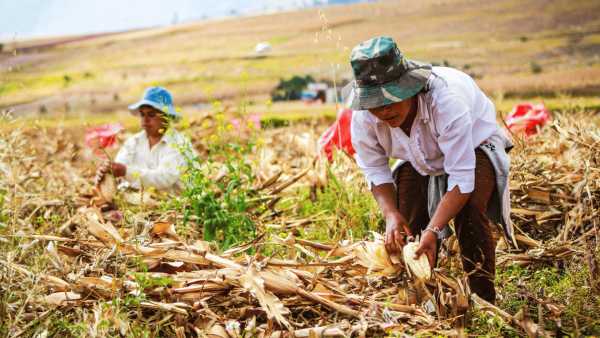
Over 1.5 million smallholder farmers and 500 cooperatives and agro-dealers are expected to benefit from improved access to certified seeds, fertilizers, mechanization, and other productivity-enhancing inputs.
The initiative aligns with continental frameworks such as the Comprehensive Africa Agriculture Development Programme (CAADP) and the Kampala Declaration on Food Systems Transformation, reinforcing Africa’s drive toward self-sufficiency and sustainable food security.
By Ayomide Otitoju
The Global Agriculture and Food Security Program (GAFSP) has approved its first allocation from a new private sector financing window, providing $14 million in de-risking capital to the African Development Bank Group (AfDB) to catalyze $200 million in private investment aimed at boosting food security in low-income African countries.
The funding, part of GAFSP’s Business Investment Financing Track launched in 2024, combines grants and concessional finance with multilateral development bank funding to attract private capital for smallholder farmers, agribusinesses, and start-ups across the agriculture value chain.
This initial allocation will establish the Agro-Inputs Risk Sharing Facility, a $200 million fund hosted by the AfDB. Of the total, $10 million will be used as de-risking capital, while an additional $4 million grant will provide technical assistance to spur private lending to agricultural SMEs in Ethiopia, Uganda, Tanzania, Malawi, and Zambia.
The facility, implemented in partnership with the African Trade & Investment Development Insurance (ATIDI), will offer guarantees to local financial institutions, reducing risk and encouraging banks to extend credit to smallholder farmers and agro-input suppliers.
Natasha Hayward, GAFSP Program Manager, said the initiative marks a major step in addressing long-standing financing challenges for smallholder farmers.
“By blending donor funds with multilateral and commercial finance, each GAFSP dollar will leverage several more in private investment, multiplying the impact on food security and climate resilience,” she said.
Philip Boahen, AfDB Coordinator for GAFSP, added that the facility would help strengthen Africa’s food systems from production to market access.
“By targeting agro-input dealers and smallholder farmers, this facility strengthens the entire value chain, making Africa’s food systems more resilient to environmental and market shocks,” he said.
Over 1.5 million smallholder farmers and 500 cooperatives and agro-dealers are expected to benefit from improved access to certified seeds, fertilizers, mechanization, and other productivity-enhancing inputs.
The initiative aligns with continental frameworks such as the Comprehensive Africa Agriculture Development Programme (CAADP) and the Kampala Declaration on Food Systems Transformation, reinforcing Africa’s drive toward self-sufficiency and sustainable food security.