




By Ayomide Otitoju
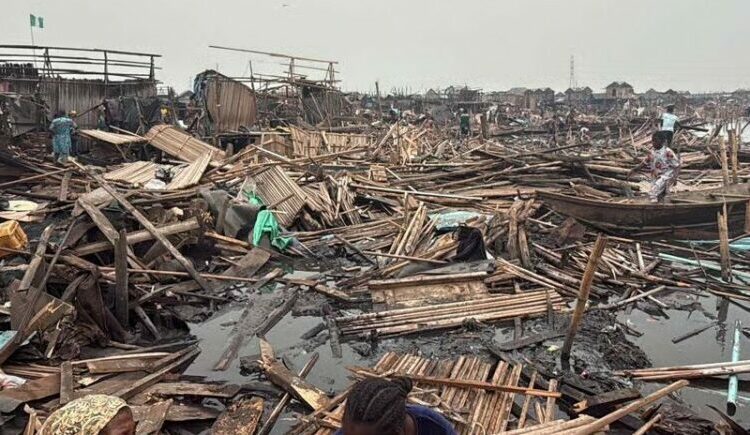
The Lagos State Government has clarified that recent demolitions in Makoko were part of a broader safety, environmental, and redevelopment initiative aimed at protecting lives and preventing disasters linked to unsafe settlements, fire outbreaks, and high-risk infrastructure.
The statement was made on Monday during a press briefing by Dr. Olajide Babatunde, Special Adviser to Governor Babajide Sanwo-Olu on eGIS and Urban Development, at the Bagauda Kaltho Press Centre, Alausa. He was joined by Commissioner for Information and Strategy, Gbenga Omotoso, and Special Adviser on Media and Publicity, Gboyega Akosile.
Dr. Babatunde said the intervention targeted areas near high-tension power lines to safeguard residents, stressing that similar clearance exercises have been conducted across Lagos following fatal incidents caused by fallen power cables. “Clearing high-tension corridors is a safety requirement across Lagos State. The action taken in Makoko is consistent with what has been done in other communities,” he added.
He disclosed that the state has set aside $2 million since 2021 for the redevelopment of the Makoko waterfront to meet international standards and assured that affected residents will be compensated. Dr. Babatunde explained that earlier redevelopment plans, including a shoreline extension project, were discontinued after environmental assessments indicated significant ecological risks. The government has since adopted the Water City Project, which allows continued habitation while addressing sanitation, infrastructure, and environmental concerns.
“The United Nations visited Makoko in 2021 and pledged support for our redevelopment efforts. Governor Sanwo-Olu committed $2 million, with $8 million expected from UN counterpart funding. However, in light of current constraints, we are calling on donor agencies, the international community, and business organizations to support us,” he said.
Dr. Babatunde highlighted previous successful urban regeneration projects in Okobaba, Adeniji-Adele, and Dosunmu, where residents were relocated and compensated through consultation and negotiated agreements. He cited recurring fire incidents, building collapses, and poor emergency access in densely populated areas as key reasons for enforcing building codes, minimum setbacks, and land pooling in redevelopment zones.
Commissioner Gbenga Omotoso added that citizens’ right to protest is protected, but must be exercised responsibly. “Protests should not block roads or disrupt essential activities. Public order remains critical in a densely populated city like Lagos,” he said, responding to concerns that Makoko demolitions were anti-people.
The Lagos State Government emphasized that its urban development policies aim to provide safe, adequate housing while aligning with international standards and safeguarding residents from preventable risks.


