






By Ayomide Otitoju
While the spotlight often shines on elite runners at the 11th edition of the Access Bank Lagos City Marathon (ABLCM), the real engine behind the event was the thousands of workers who kept the city running smoothly before, during, and after the race.
Major highways were closed, tens of thousands of participants moved through Lagos, and the route was meticulously prepared with banners, barricades, medical tents, hydration stations, and precision timing systems. Yet, the work continued long after the final runner crossed the finish line.
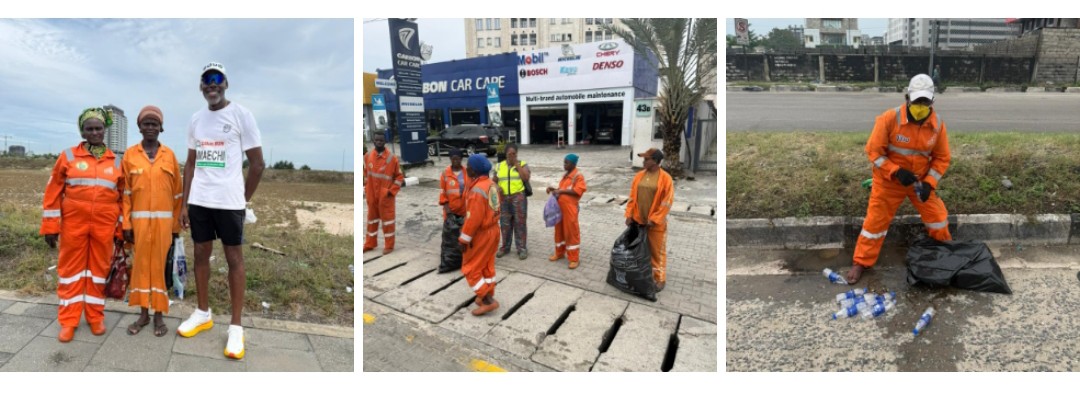
Within minutes, sanitation teams mobilised along the marathon corridor, systematically sorting waste, collecting plastic bottles, sachets, and general refuse, and coordinating rapid removal via collection trucks. Temporary race infrastructure was dismantled efficiently, reflecting strong coordination between municipal authorities, private waste management firms, event organisers, and environmental agencies.
In Lagos, where urban momentum rarely slows, the speed and discipline of the post-race clean-up highlighted the city’s operational maturity. Beyond participation numbers and prize purses, sustainability has become a defining metric for large-scale sporting events globally. The 2026 marathon demonstrated that scale and environmental responsibility can coexist.
The clean-up also generated economic activity, providing temporary employment for sanitation and logistics personnel and supporting recycling partners engaged in material recovery, reinforcing Lagos’s circular economy initiatives.
Such operational success is no accident. Deliberate planning, waste volume forecasting, route mapping, contingency planning, and coordinated communication between sponsors like Access Bank Plc and municipal bodies were central to the marathon’s environmental performance.
Each edition of ABLCM has built on lessons learned from previous years. International participation and media visibility have grown, accreditation standards have strengthened, and environmental management has become a core operational principle rather than an afterthought.
The 2026 marathon underscores that progress is incremental, driven by disciplined systems and institutional learning. Beyond athletic feats, the event showcased the critical work of volunteers, sanitation crews, planners, security personnel, and environmental partners—an unseen workforce ensuring that the city remains functional long after the cheering fades.
Ultimately, global cities are judged not just by the spectacle they host but by how responsibly they restore. At the 2026 Lagos City Marathon, endurance was demonstrated not only on the track but through the coordinated, sustainable systems and people keeping the city moving.