







By Ayomide Otitoju
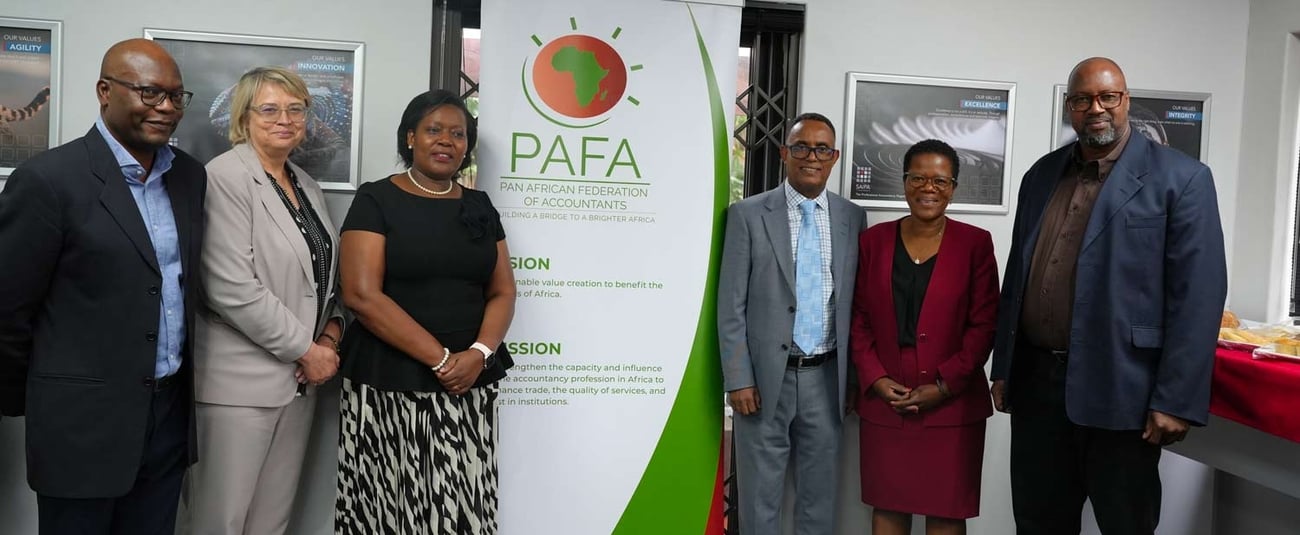
The African Development Bank Group (AfDB) and the Pan African Federation of Accountants (PAFA) have launched a $5.2 million institutional support project to tackle the shortage of qualified public sector accountants and auditors across Africa. The launch took place on 26 November at The South African Institute of Professional Accountants (SAIPA) House in Johannesburg.
The Strengthening PAFA and PFM Resilience in Africa project aims to harmonise accounting standards, tools, and practices across the continent, enhance the capacity of professional accountancy organisations, improve financial reporting in transition states, and professionalise public sector accountants and auditors. The funding is provided as a grant through AfDB’s Transition Support Facility.
Kennedy Mbekeani, Director General of AfDB’s Southern Africa Regional Development and Business Delivery Office, said:
“Strong, transparent public financial management is essential for resilient economies and improved services for citizens. Through this partnership with PAFA, we are investing in the professionals and institutions that protect public resources.”
PAFA was selected as the project’s implementing partner due to its extensive pan-African reach, comprising 57 professional accountancy organisations across 47 countries. The initiative will also leverage the African Professionalisation Initiative, a collaboration with the African Organisation of Supreme Audit Institutions (AFROSAI) and the African Association of Accountants General.
Alta Prinsloo, PAFA CEO, said:
“This partnership with the African Development Bank is a decisive step towards strengthening Africa’s public financial management landscape. By investing in the professionalisation of accountants and auditors, we are building the skills, institutions, and standards that enable transparency, trust, and effective governance.”
The project will implement learning programmes, enhance the institutional capacity of Professional Accountancy Organisations, and promote women’s participation in the profession through mentorship and training. It also supports broader strategic goals, including standardising qualifications and skills mobility under the African Continental Free Trade Area, ensuring recognition of Africa’s financial professionals across borders.