




By Ayomide Otitoju
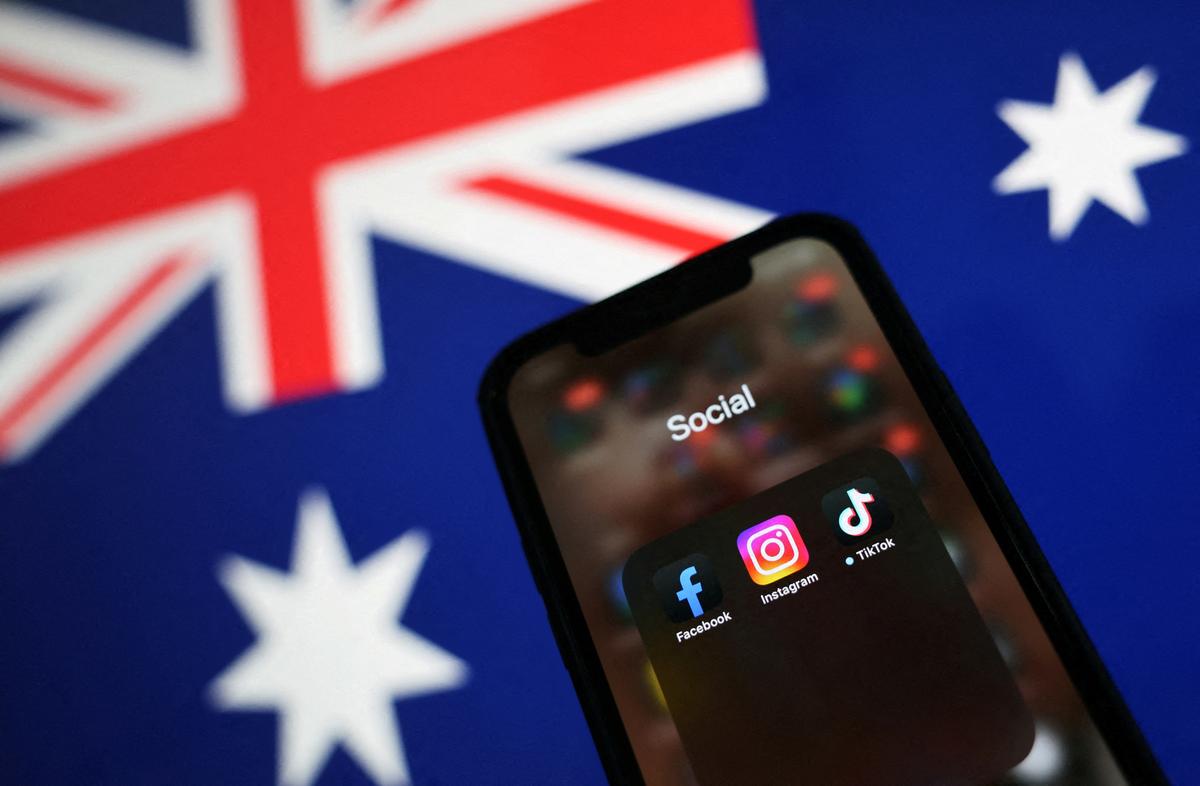
Australia’s landmark decision to ban social media use for children under 16 is set to turn the country into a real-world test case for how restrictions on online platforms affect young people, according to digital wellbeing experts.
Supporters of the December 10 ban cite a growing body of research linking excessive screen time to declining adolescent mental health. Critics, however, argue that evidence remains inconclusive and warn the policy may cause unintended harm.
Amy Orben, a psychologist who leads the digital mental health programme at the University of Cambridge, noted that adolescent brains continue developing into the early twenties. She said numerous observational studies show a correlation between high social media use and poorer mental health, but establishing causation remains difficult.
“Technology changes so fast that the evidence base will always be uncertain,” Orben told AFP. “What could change the dial are experimental studies or evaluations of natural experiments. Evaluating the Australia ban is hugely important because it gives us a window on what might be happening.”
To better understand potential cause-and-effect dynamics, Australian researchers have launched the “Connected Minds Study”, which will track the wellbeing of 13- to 16-year-olds affected by the ban.
A World Health Organization survey in 2023 found that 11 percent of adolescents struggled to control their use of social media. Other studies have linked heavy use to sleep disruption, negative body image, declining school performance and emotional distress. A 2019 JAMA Psychiatry study, for instance, reported that U.S. children who spent more than three hours daily on social media could be at higher risk of mental health challenges.
Australian psychiatrist Christian Heim said the debate extends beyond scientific evidence. “I don’t think this is a science issue. This is a values issue,” he said, pointing to concerns over cyberbullying, exposure to harmful content and other risks facing young people online.
Heim also cited emerging research, including a 2018 study by neuroscientist Christian Montag suggesting that addiction to the Chinese messaging app WeChat was associated with reduced grey matter volume in certain brain regions. “We can’t wait for stronger evidence,” he said.
Scott Griffiths of the Melbourne School of Psychological Sciences agreed that definitive proof of harm is unlikely to appear soon, but said the ban is “worth trying”. He expressed hope that major social media companies will take stronger steps to protect young users in response to the legislation.
Public sentiment appears favourable: a recent poll suggested more than three-quarters of Australian adults supported the ban before it was passed.
However, more than 140 academics, advocates and experts signed an open letter warning that the measure is “too blunt an instrument”. One signatory, Queensland University of Technology digital media professor Axel Bruns, told AFP that rising youth anxiety may be fuelled by broader pressures, including pandemic-related disruptions and global conflicts in Gaza and Ukraine.
He and others cautioned that a ban could drive some teens toward more extreme corners of the internet, while cutting off marginalised youth from communities that support their identity and wellbeing.
Noelle Martin, an activist working on image-based abuse and deepfake harms, argued that the ban is unlikely to make a meaningful difference without stronger enforcement of existing laws. “I don’t believe it will stop, prevent, or do much to meaningfully combat this issue,” she said.
Despite the debate, the Australian government has moved ahead. “Social media is doing social harm to our children,” Prime Minister Anthony Albanese said earlier this year. “There is no doubt that Australian kids are being negatively impacted by online platforms, so I’m calling time on it.”