






By Ayomide Otitoju
Electricity Distribution Companies (DisCos) recorded modest operational improvements in the third quarter of 2025, with tariff collection efficiency rising to 80.7 per cent, according to the latest report released by the Nigerian Electricity Regulatory Commission (NERC).
The regulator said the 4.63 percentage point increase in collection efficiency reflects gradual gains in revenue recovery, despite the continued application of non–cost-reflective tariffs across the sector. NERC noted that the improvement came even as government subsidies remained critical to sustaining the electricity value chain.
According to the report, DisCos collected ₦570.21 billion of the ₦706.61 billion billed to customers between July and September, translating to a collection efficiency of 80.7 per cent, compared with 76.07 per cent in the previous quarter. Billing efficiency also improved to 82.69 per cent from 81.61 per cent in Q2, although cumulative billing losses stood at ₦147.92 billion.
NERC disclosed that total energy offtake by DisCos during the quarter was valued at ₦854.53 billion. However, government subsidies accounted for 58.63 per cent of total invoices issued by Generation Companies (GenCos), underlining the sector’s continued reliance on public funding. The Federal Government paid ₦458.75 billion in electricity subsidies in Q3, representing a ₦55.59 billion or 10.81 per cent reduction from the ₦514.35 billion recorded in the previous quarter.
The commission attributed the sustained subsidy burden to the freezing of certain end-user tariffs at July 2024 levels, despite rising generation costs, even after the introduction of the Band ‘A’ tariff regime. It explained that, in the absence of cost-reflective tariffs, the government covers the gap between actual costs and approved tariffs through subsidies applied to the generation cost payable by DisCos to the Nigerian Bulk Electricity Trading Plc (NBET) as part of their Remittance Obligation.
NERC said the reduction in subsidy payments was driven by a 6.08 per cent decline in energy offtake by DisCos and a 0.98 per cent drop in the average cost of electricity generation per kilowatt-hour, while end-user tariffs remained unchanged.
On bilateral transactions, the report revealed weak remittances from international customers, who paid just $7.125 million of the $18.69 million invoiced by the Market Operator, representing a remittance rate of 38.09 per cent. By contrast, domestic bilateral customers remitted ₦3.19 billion out of ₦3.64 billion billed, achieving a remittance rate of 87.61 per cent.
The report further showed that total energy received by DisCos in Q3 stood at 7,348.95 gigawatt-hours (GWh), but only 6,158.54 GWh was billed to end-users, resulting in an energy accounting efficiency of 83.80 per cent, up from 82.43 per cent in Q2.
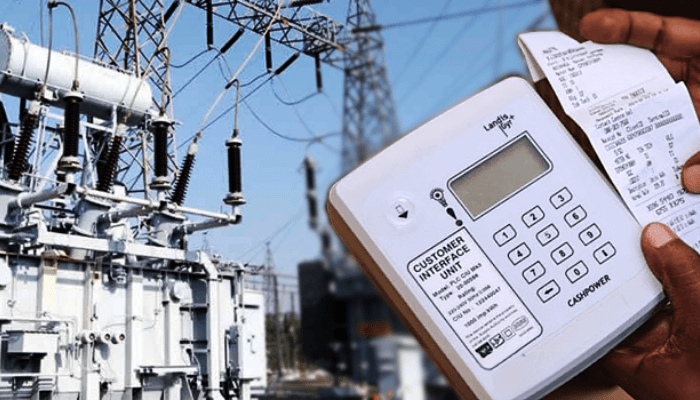
NERC identified customer unwillingness to pay, dissatisfaction with service quality, and inadequate metering as major contributors to revenue under-recovery in the sector. It also stressed that prompt settlement of upstream market obligations remains vital to sustaining generation and transmission capacity, noting that the waterfall payment structure incentivises DisCos to improve collections, as most allowed revenues rank below market obligations.
In terms of individual performance, Ikeja Electricity Distribution Company recorded the highest collection efficiency at 100 per cent. Eko (88.74 per cent), Benin (86.44 per cent), and Abuja (81.60 per cent) DisCos also posted collection efficiencies above 80 per cent. Kaduna Disco recorded the lowest collection efficiency at 45.67 per cent.
Quarter-on-quarter analysis showed notable improvements in collection efficiency by Ikeja (+17.58 percentage points), Port Harcourt (+8.83pp), Yola (+8.72pp), Abuja (+5.24pp), Jos (+4.90pp), Eko (+0.94pp), and Benin (+0.89pp). However, Kaduna (-2.70pp) and Ibadan (-1.34pp) DisCos recorded the steepest declines, while four other DisCos also posted marginal drops in performance during the period.


