



By Ayomide Otitoju
An Ebola outbreak in the Democratic Republic of Congo has spread into parts of eastern South Kivu province under the control of the Rwanda-backed M23 militia, raising fresh concerns over the widening reach of the deadly disease, the group’s spokesman said.
The development comes as efforts to contain the outbreak face mounting challenges due to ongoing conflict in eastern DRC, including clashes between government forces and M23 fighters, which have disrupted access to affected areas and hampered health response operations.
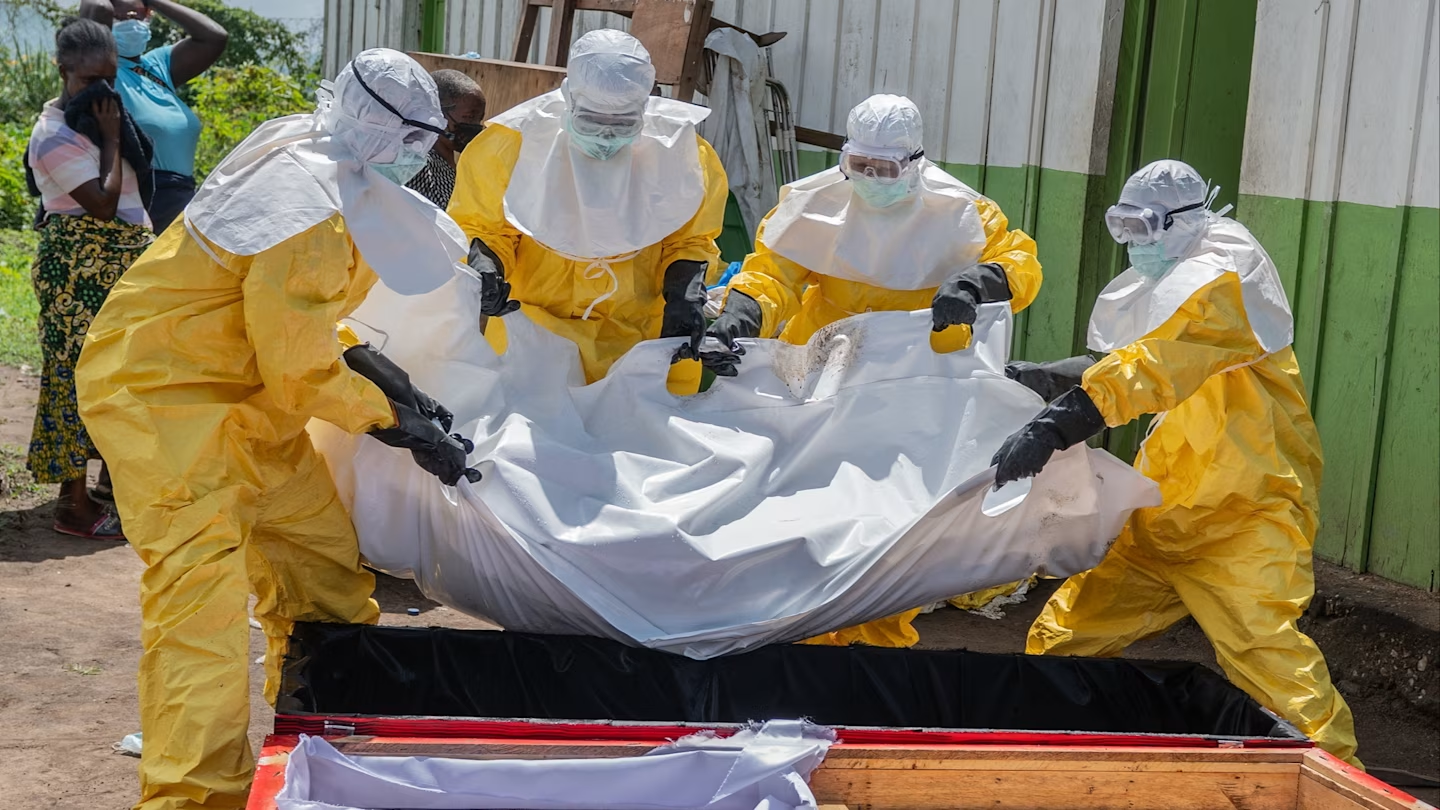
The M23 group, which controls parts of the mineral-rich east, said tests confirmed a new Ebola case linked to Bukavu in South Kivu. The spokesman said the patient, a 28-year-old who travelled from Kisangani in Tshopo province, died before diagnosis was confirmed, adding that burial protocols were observed.
Congolese authorities had not yet commented on the reported case.
According to the World Health Organization (WHO), the outbreak—now the 17th recorded in the country—has resulted in about 139 suspected deaths from nearly 600 probable cases, with most infections concentrated in Ituri province, the epidemic’s epicentre.
Additional cases have been reported in North Kivu and neighbouring Uganda, where one death has been recorded, though South Kivu had previously remained unaffected.
The WHO has warned that insecurity, limited laboratory capacity, and restricted access to remote communities are complicating surveillance efforts, with many figures based on suspected rather than confirmed cases.
The North and South Kivu regions remain divided by frontlines between the Congolese army and M23 forces, while key infrastructure such as Goma airport has remained closed since the city fell to the militia in early 2025, further limiting humanitarian access.
Health officials say the outbreak is being driven by the Bundibugyo strain of Ebola, for which there is currently no approved vaccine or treatment.
International concern is growing, with a US national who contracted Ebola in the DRC now receiving treatment in Germany, while his family members have been placed in isolation as a precaution.
While the WHO has assessed the regional risk as high, it maintains that the likelihood of global spread remains low.
In response, several countries have introduced precautionary measures, including enhanced screening of travellers from affected regions and temporary travel restrictions.
Meanwhile, disruptions linked to the outbreak have also affected sports preparations, with the DRC national football team cancelling a training camp in Kinshasa ahead of World Cup qualifiers.
The crisis is unfolding amid shrinking global humanitarian funding, with aid organisations warning that reduced international support is weakening outbreak response capacity across affected regions.


