




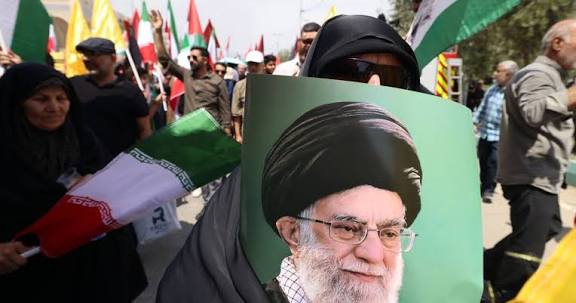
Iran’s Supreme Leader, Mojtaba Khamenei, has vowed to avenge the killing of his father and predecessor, Ali Khamenei, hours after United States President Donald Trump warned Tehran against any attempt to assassinate him.
The renewed exchange of threats came on Saturday as tensions remained high despite diplomatic efforts to preserve a fragile ceasefire following the Iran-Israel conflict that erupted in late February.
In a written message, Mojtaba Khamenei said revenge for his father’s death was inevitable and reflected the will of the Iranian people.
“Vengeance is the will of our nation and must inevitably be carried out,” he said.
Khamenei, who succeeded his father after he was killed in US-Israeli strikes in February, said the pursuit of retaliation did not depend on any individual leader.
“This matter depends neither on my personal existence nor on that of other officials. Whether we are present or not, it will come to pass,” he stated in his first public message since his father’s funeral earlier this week.
Earlier on Saturday, Trump warned Iran against threatening his life, saying any assassination attempt would trigger a devastating US military response.
In a post on his Truth Social platform, the US president said the military was prepared to launch overwhelming strikes if Iran acted on what he described as threats against him.
He said the United States had missiles “locked and loaded” and warned that Iran would face total destruction if any attempt was made on the life of a sitting US president.
The exchange followed renewed hostilities this week that strained an interim agreement intended to end the conflict between Iran and Israel. While Trump declared the ceasefire effectively over, regional mediators have continued efforts to revive negotiations.
Iranian media reported that a Qatari delegation visited Tehran on Friday to reinforce Doha’s mediation efforts, while Foreign Minister Abbas Araghchi insisted Tehran had complied with the terms of last month’s memorandum of understanding.
“There can only be mutual compliance,” Araghchi said, maintaining that Iran had honoured its commitments.
Although US and Iranian officials have held both direct and indirect talks since signing the agreement, no significant breakthrough has been reported.
A major sticking point remains the Strait of Hormuz, which Iran closed to commercial shipping during the conflict in response to US-Israeli attacks. Tehran has since insisted on regulating access to the strategic waterway, a move rejected by Washington.
Araghchi arrived in Oman on Saturday for discussions on the administration of the strait, while US media reported that Washington had given Tehran until Saturday to halt attacks on commercial vessels and recognise the waterway as open.
This week’s escalation followed allegations that Iran targeted three commercial ships accused of straying from approved routes. The United States responded with airstrikes on about 90 targets across Iran, according to the US military.
Iran’s Health Ministry said the attacks killed 17 people and injured 115 others, while Tehran launched retaliatory strikes against US-allied countries in the Gulf hosting American military bases.
Despite the heightened rhetoric, Qatar and Pakistan have continued diplomatic efforts to prevent further escalation.
Pakistan’s Prime Minister Shehbaz Sharif said he had urged Iranian President Masoud Pezeshkian to preserve what he described as the region’s “hard-earned peace.”
However, Iran’s chief negotiator, Mohammad Bagher Ghalibaf, ruled out any suggestion of surrender.
“Ending the war is a priority for the countries of the world, but everyone must know that this confrontation will never end with Iran’s surrender,” he said, adding that the Iranian people remained fully prepared to defend themselves.