




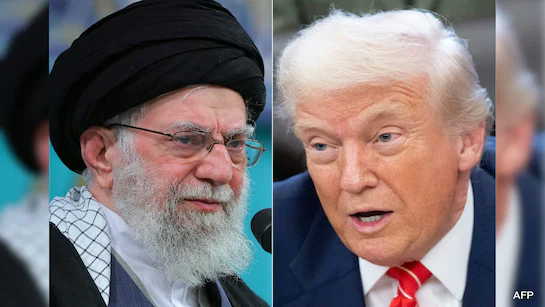
Iran and the United States on Thursday held talks in Switzerland in what observers describe as a last-ditch diplomatic effort to avert conflict, against the backdrop of one of Washington’s largest military deployments to the Middle East in decades.
The Oman-mediated discussions follow repeated threats from US President Donald Trump to strike Iran, including a reported 15-day ultimatum for Tehran to reach an agreement.
While Iran has maintained that negotiations should focus strictly on its nuclear programme, Washington is pressing for curbs on Tehran’s missile development and its support for regional militant groups.
Delegations met at the residence of Oman’s ambassador under tight security, pausing after a morning session before resuming later in the day, according to Iran’s foreign ministry. Oman’s Foreign Minister, Badr Albusaidi, said both sides showed “unprecedented openness to new and creative ideas and solutions.”
UN nuclear chief Rafael Grossi was reported to have joined the negotiations.
Iranian President Masoud Pezeshkian reiterated ahead of the talks that Tehran was “not at all” seeking nuclear weapons, maintaining that its programme is for civilian purposes.
Meanwhile, the United States has significantly increased its military presence in the region. The USS Gerald R. Ford, the world’s largest aircraft carrier, departed a naval base in Crete on Thursday, joining the USS Abraham Lincoln and several destroyers already deployed in the Middle East.
In his recent State of the Union address, Trump accused Iran of pursuing “sinister nuclear ambitions” and developing missiles capable of threatening Europe and US overseas bases. Tehran dismissed the claims as “big lies,” stating that its missile range does not extend to the United States.
US Secretary of State Marco Rubio warned that Iran must also negotiate limits on its ballistic missile programme, while Vice President JD Vance urged Tehran to take Washington’s warnings seriously.
Iran’s Foreign Minister Abbas Araghchi, who is leading his country’s delegation, described the talks as “a historic opportunity,” saying an agreement was “within reach.”
The negotiations follow earlier rounds in Oman and Geneva. A previous diplomatic effort collapsed after Israel launched strikes on Iranian targets last year, triggering a brief but intense conflict.
Residents in Tehran expressed mixed views about the prospect of renewed hostilities, with some fearing severe economic hardship in the event of war.
The outcome of the Switzerland talks is being closely watched as tensions remain high across the region.


