







By Ayomide Otitoju
Opposition political parties have rejected the 2026 Electoral Act recently passed by the National Assembly and signed into law by President Bola Tinubu, describing parts of the legislation as anti-democratic.
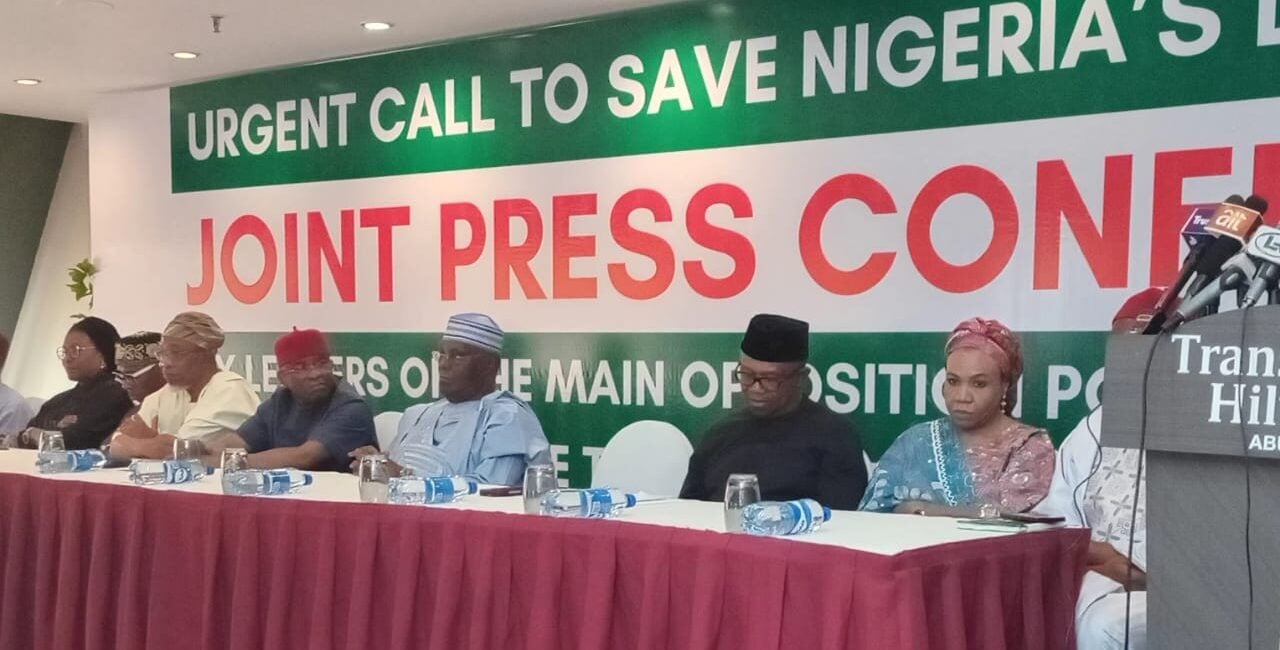
At a press briefing themed “Urgent Call to Save Nigeria’s Democracy” held at the Transcorp Hilton Hotel in Abuja on Thursday, opposition leaders called on lawmakers to immediately commence a fresh amendment process to expunge what they termed “obnoxious provisions” in the Act.
Reading from a communiqué, National Chairman of the New Nigeria Peoples Party (NNPP), Ahmed Ajuji, said the coalition would accept nothing short of a comprehensive review of the law to guarantee free, fair and transparent elections.
“We demand that the National Assembly immediately commence a fresh amendment to the Electoral Act 2026, to remove all obnoxious provisions and ensure that the Act reflects only the will and aspiration of Nigerians,” he said.
Prominent figures at the event included former Vice President Atiku Abubakar, former Anambra State governor Peter Obi, former Rivers State governor Rotimi Amaechi, former Osun State governor Rauf Aregbesola, and former Senate President David Mark, many of whom are aligned with the African Democratic Congress (ADC). NNPP chieftain Buba Galadima was also in attendance.
At the centre of the opposition’s concerns is the amendment to Section 60(3), which permits presiding officers to rely on manual transmission of results in the event of communication failure. The coalition argued that the clause weakens mandatory electronic transmission and could create loopholes for manipulation.
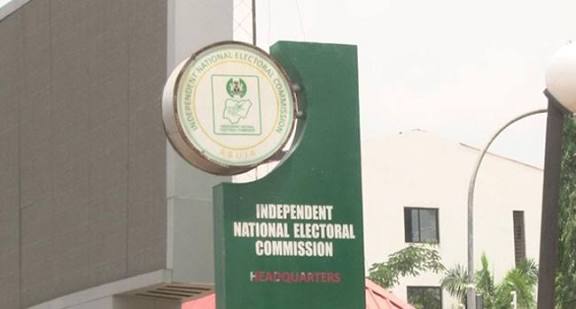
They maintained that Nigeria’s electoral infrastructure is capable of supporting nationwide electronic transmission, citing previous assurances from the Independent National Electoral Commission (INEC).
The opposition also rejected amendments to Section 84, which limit political parties to direct primaries and consensus methods for candidate selection. They described the provision as an unconstitutional intrusion into internal party affairs, insisting that indirect primaries remain a legitimate democratic option.
Citing alleged irregularities in recent Federal Capital Territory local government elections, the coalition said the developments had deepened doubts about the credibility of the electoral system ahead of the 2027 general elections. They further condemned reported attacks on ADC leaders in Edo State, warning that rising political violence could destabilise the democratic process.
The parties pledged to challenge the Electoral Act 2026 through constitutional means and called on civil society groups and citizens to support efforts to safeguard democracy.
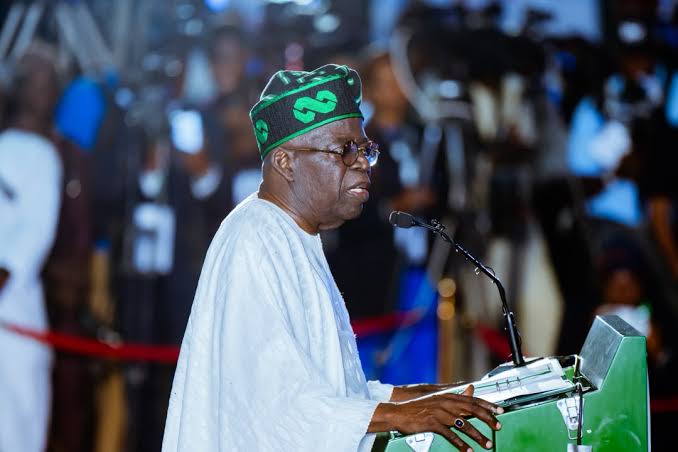
President Tinubu, who signed the Electoral Act (Amendment) 2026 into law on February 18, defended the inclusion of a manual transmission fallback, questioning Nigeria’s readiness for full real-time electronic transmission and warning of potential technical glitches and cybersecurity risks.
The legislation, which includes statutory recognition of the Bimodal Voter Accreditation System and revised election timelines, generated heated debates in both chambers of the National Assembly, particularly over the transmission of results ahead of the 2027 polls.
In the Senate, a division vote saw 55 lawmakers support retention of the manual transmission proviso, while 15 voted against it after a motion by Senator Enyinnaya Abaribe to remove the clause. A similar dispute in the House of Representatives over compulsory real-time electronic transmission also sparked protests before the Speaker ruled in favour of rescinding the earlier decision.


