








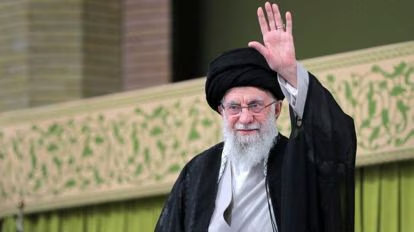
Israeli Defence Minister Israel Katz has revealed that the Israeli military had plans to assassinate Iran’s Supreme Leader, Ayatollah Ali Khamenei, during the recent 12-day conflict between the two nations but failed to do so due to operational constraints.
In an interview with public broadcaster Kan on Thursday, Katz stated that Khamenei would have been a legitimate target had the opportunity arisen. “If he had been in our sights, we would have taken him out,” Katz said, adding that Israel’s intelligence and military teams “searched a lot” for the supreme leader’s whereabouts during the war.
According to Katz, Khamenei took significant precautions, including going “very deep underground” and severing contact with top commanders, which rendered an attack on him “not realistic.”
Speaking to Channel 13 later the same evening, Katz said Israel would no longer pursue assassination attempts against Khamenei now that the ceasefire is in place. “There is a difference between before the ceasefire and after the ceasefire,” he noted.
Katz had previously described Khamenei as someone who “can no longer be allowed to exist,” following reports that the United States had vetoed Israeli plans to target him during the war. He drew parallels with former Hezbollah leader Hassan Nasrallah, who was killed in a Beirut airstrike in September 2024. “He should have learned from the late Nasrallah, who stayed deep in a bunker,” Katz remarked.
Despite the ceasefire, Katz affirmed Israel’s ongoing military readiness. “We maintain our aerial superiority and are prepared to strike again,” he said, reiterating Israel’s longstanding stance against Iran acquiring nuclear weapons or long-range missile capabilities.
In an interview with Channel 12, Katz admitted that Israel does not have complete knowledge of all Iranian nuclear facilities but insisted that Israeli airstrikes had effectively dismantled Iran’s uranium enrichment infrastructure. “The enriched material wasn’t the primary target — the capabilities were,” he said.
The extent of the damage to Iran’s nuclear program remains a matter of debate. A leaked U.S. intelligence report estimated that the strikes had set Iran back by several months, while Katz and some officials argued the damage could take years to repair.
The latest conflict, which began on June 13 and ended with a ceasefire on June 24, was triggered by Israeli airstrikes aimed at halting Iran’s alleged nuclear ambitions — claims Tehran has consistently denied. Both countries have since claimed victory in the short but intense war.


