




By Ayomide Otitoju
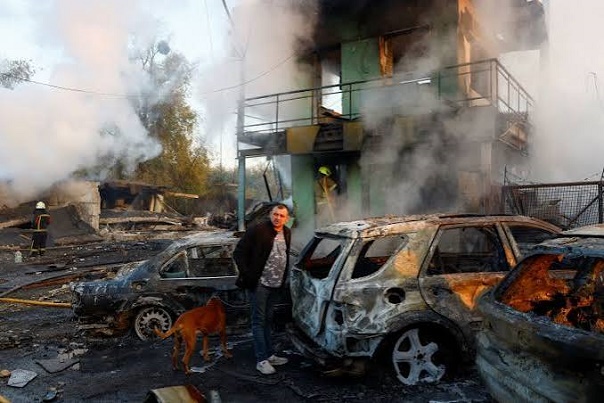
Israel launched a new wave of airstrikes on Tehran and Beirut on Tuesday, while attacks in Baghdad drew Iraq further into the Middle East conflict that has already triggered global economic turmoil.
The Iranian capital, which has faced near-daily bombardment since a joint US-Israeli strike on February 28, was targeted by Israeli forces, who described the operation as hitting “terror regime infrastructure.” The war, now in its third week, has claimed hundreds of lives and expanded to include Iranian strikes on Gulf nations and Israeli bombardments in Lebanon.
Lebanese state media reported that dawn airstrikes hit a residential building in Beirut’s southern suburbs, a Hezbollah stronghold. Lebanese authorities say over one million people have been displaced since March 2, with 130,000 housed in more than 600 collective shelters. The country was drawn into the conflict after Tehran-backed Hezbollah militants attacked Israel following the killing of Iranian Supreme Leader Ayatollah Ali Khamenei on the first day of the war.
In Iraq, a drone and rocket attack targeted the US embassy in Baghdad early Tuesday, while a separate strike killed four people at a residence reportedly hosting Iranian advisors. Earlier, air defenses thwarted a rocket attack on the embassy, and a drone set fire to a luxury hotel in Baghdad’s fortified Green Zone.
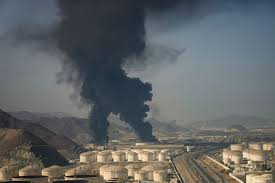
The conflict has driven global oil prices up sharply, with the Gulf waterway, through which a fifth of the world’s crude passes, heavily disrupted. Attacks on key oil infrastructure in the UAE and southern Iraq have compounded market instability, pushing global oil prices more than 40 percent higher since the strikes began. Australia’s central bank cited “sharply higher fuel prices” in its recent interest rate hike, attributing the rise to the US-Israel war on Iran.
US President Donald Trump urged allied nations to join an escort mission through the Strait of Hormuz, warning that NATO could be weakened if partners declined. European and Pacific allies, including the UK, Germany, Japan, Australia, and EU members, have largely resisted direct military involvement in the strait, while Western powers called on Israel to exercise restraint in Lebanon.
Meanwhile, Iran has retaliated against at least ten countries hosting US forces, claiming to have launched roughly 700 missiles and 3,600 drones. More than 1,200 Iranians have reportedly died in US and Israeli strikes, according to Tehran’s health ministry. Iranian officials, however, remain defiant. “Iran does not hesitate to defend itself and is ready to continue the war wherever it may lead,” Foreign Minister Abbas Araghchi said.
Despite the ongoing violence and internet blackouts, some normalcy has returned to Iran, with cafes, restaurants, and Tehran’s Tajrish bazaar reopening ahead of the Persian New Year. The UN refugee agency estimates that up to 3.2 million people have been displaced in Iran alone.


