


By Ayomide Otitoju
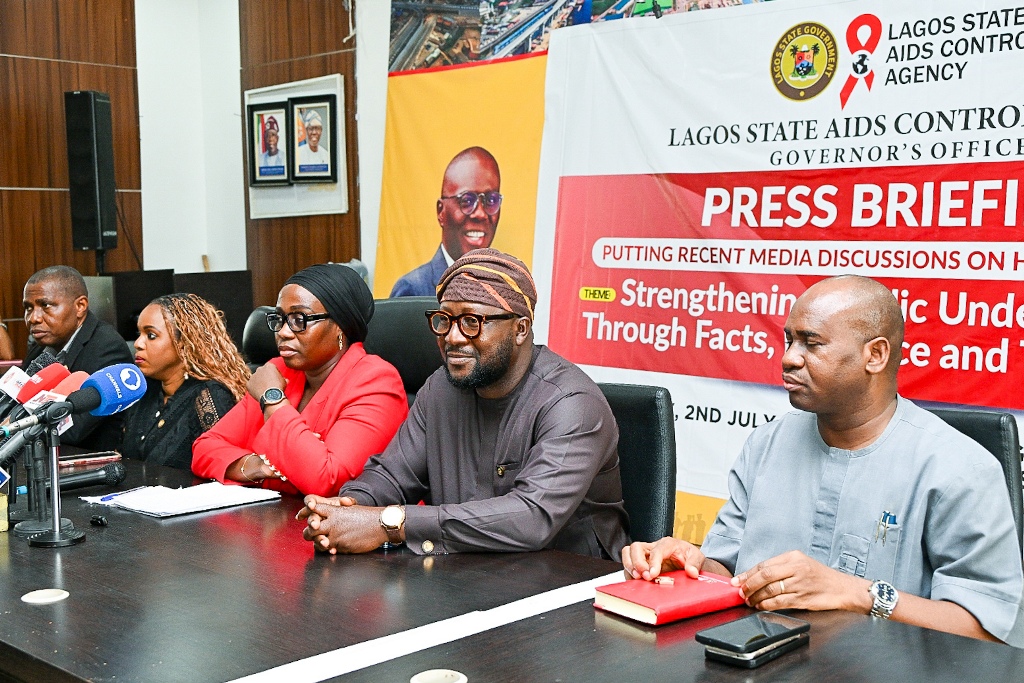
The Lagos State Government has reassured residents that there is no cause for alarm over recent reports on HIV in the state, clarifying that widely circulated figures represent newly diagnosed HIV-positive cases rather than a surge in new infections.
Speaking at a press briefing at the Bagauda Kaltho Press Centre in Alausa, Ikeja, on Thursday, the Chief Executive Officer of the Lagos State AIDS Control Agency (LSACA), Dr. Folakemi Animashaun, said recent media reports had misinterpreted HIV programme data, stressing that Lagos remained committed to an evidence-based and sustainable response to the epidemic.
Animashaun explained that the widely reported figure of 10,430 referred to newly diagnosed HIV-positive individuals and not people who contracted the virus in 2025. She noted that many of those diagnosed may have been infected years earlier, while others were identified through referrals from other states or expanded HIV testing services across Lagos.
She warned that confusing newly diagnosed cases with new infections could fuel stigma, discrimination and unnecessary panic, while discouraging people from accessing HIV testing and treatment services.
According to her, Lagos conducted 504,800 HIV tests in 2025, identifying 11,940 positive cases, representing a positivity rate of 2.4 per cent. In the first quarter of 2026, 179,229 tests produced 3,390 positive cases with a lower positivity rate of 1.9 per cent.
“The declining positivity rate despite expanded testing is a significant epidemiological indicator that reflects improving epidemic control,” she said.
Animashaun disclosed that 147,904 people were receiving antiretroviral therapy in Lagos in 2025, with 97 per cent achieving viral suppression. She added that the state’s Early Infant Diagnosis positivity rate declined from 5.1 per cent in 2020 to 1.5 per cent in 2025, reflecting sustained progress in preventing mother-to-child transmission of HIV.
She also announced the commencement of a three-month HIV Response Acceleration Plan covering July to September 2026 to expand testing, strengthen treatment linkage and retention, improve community prevention efforts, enhance data quality and promote programme sustainability across the state’s 20 Local Government Areas and 57 Local Council Development Areas.
Animashaun said oral and long-acting injectable Pre-Exposure Prophylaxis (PrEP) services remain available free of charge across the state.
She further disclosed that Lagos had become the first sub-national government in Nigeria to procure antiretroviral medicines with its own funds, with the first consignment expected before the end of August 2026.
Describing the move as a landmark intervention, she said it would help guarantee uninterrupted treatment for people living with HIV while reducing dependence on donor support.
Responding to questions from journalists, Animashaun clarified that Lagos had not recorded any confirmed recent HIV infections during the current reporting period, noting that the last confirmed recent infection was detected in January 2025 before changes in HIV testing technology.
She added that Nigeria is transitioning to fourth-generation HIV testing technology capable of detecting infections earlier, while noting that the 2018 National HIV survey remains the latest official prevalence reference pending the release of findings from a new national survey.
Earlier, the Special Adviser to the Governor on Media and Publicity, Mr. Gboyega Akosile, said the briefing was convened to correct misinformation circulating in sections of the traditional and digital media.
He said the Lagos State Government, under Governor Babajide Sanwo-Olu, had continued to invest in healthcare infrastructure and HIV prevention, treatment and care programmes.
Akosile recalled that following the suspension of HIV-related foreign assistance by the United States government under President Donald Trump, Lagos swiftly implemented measures to ensure uninterrupted HIV services across the state.
He urged journalists to verify information before publication, stressing that the government remained committed to protecting residents through proactive public health interventions.
Also speaking, the Field Coordination Officer of the United Nations Programme on HIV/AIDS (UNAIDS), Dr. Temitope Fadiya, commended Lagos for sustaining an evidence-based HIV response driven by strategic partnerships, expanded healthcare access and community engagement.
Fadiya said the state’s investments in HIV testing, prevention, treatment and care had improved awareness, expanded access to services, reduced infections and enhanced the quality of life of people living with HIV.
He emphasised that continued collaboration among government agencies, development partners, healthcare providers, civil society organisations and communities would be critical to ending the HIV epidemic and reaffirmed UNAIDS’ support for Lagos State’s HIV response.
In his closing remarks, the Lagos State HIV/AIDS Programme Coordinator, Dr. Oladipupo Fisher, urged residents to know their HIV status early and take advantage of free HIV prevention services, including oral and long-acting injectable PrEP, available across the state. He also appealed to the media to continue supporting the dissemination of accurate information on HIV.Copyright TRUSTAFRICA NEWS.
All rights reserved. This material, and other digital content on this website, may not be reproduced, published, broadcast, rewritten or redistributed in whole or in part without prior express written permission from TRUSTAFRICA NEWS.
Contact: hello@trustafricanews.com.ng