








By Ayomide Otitoju
Lagos State has launched and formally disseminated its revised Task-Shifting, Task-Sharing (TSTS) Policy, marking a significant step in addressing persistent health workforce shortages and expanding access to essential healthcare services for its more than 30 million residents.
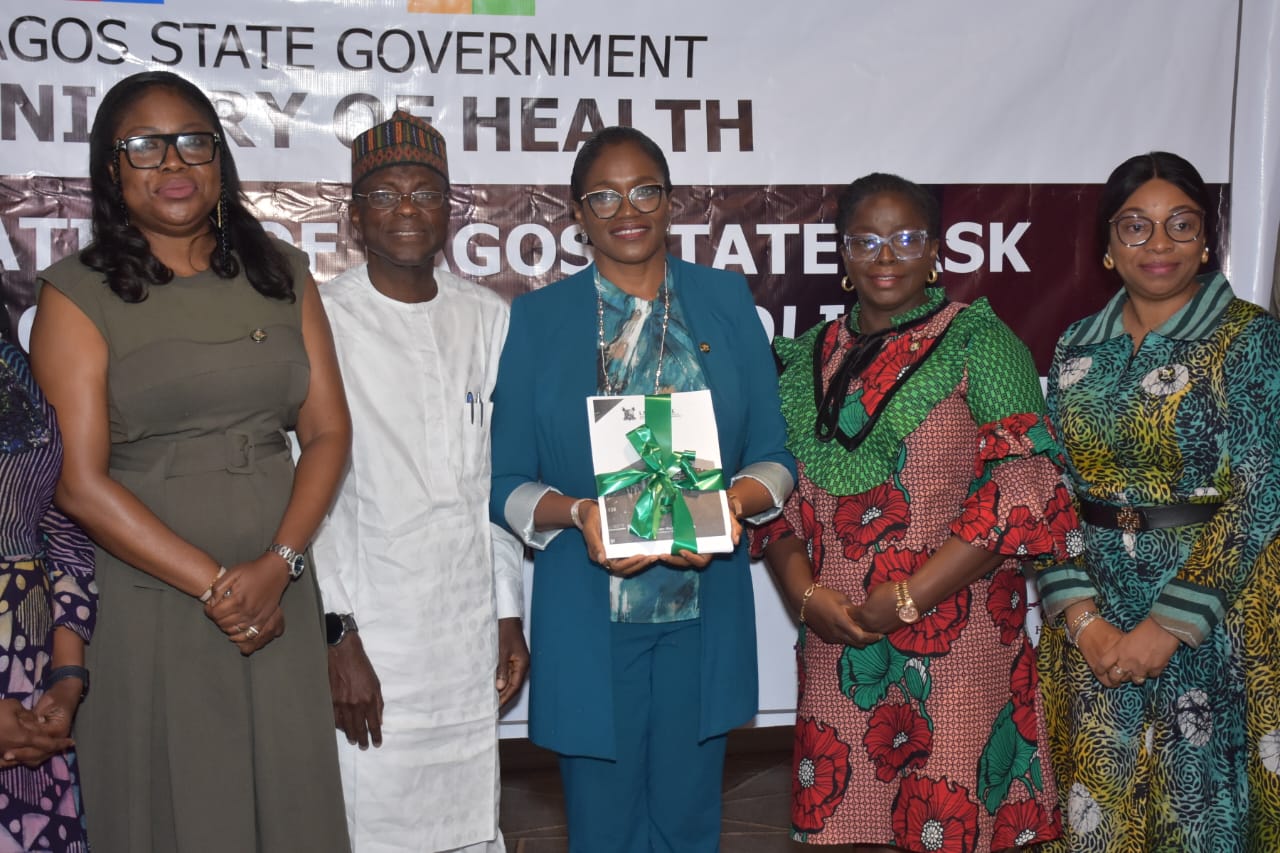
The launch event, held on Thursday, December 11, at the Marriott Hotel in Ikeja, brought together policymakers, development partners, professional bodies, and technical experts, who described the revised policy as a critical tool for advancing Universal Health Coverage (UHC) in the state.
Speaking at the event, the Special Adviser to the Governor on Health, Dr. Kemi Ogunyemi, said the revised policy was adapted from the national TSTS framework and redesigned to reflect Lagos State’s unique population dynamics and healthcare delivery realities. She noted that the document builds on lessons from the 2017 edition, incorporating broader stakeholder input, clearer operational guidance, and stronger alignment with global best practices.
Dr. Ogunyemi highlighted the pressures created by Lagos’ rapidly growing population and the uneven distribution of healthcare workers across facilities. Citing the World Health Organization’s benchmark of 2.3 doctors, nurses, and midwives per 1,000 people, she stressed the urgent need for innovative solutions to optimise available human resources.
Under the revised policy, frontline health workers—including nurses, midwives, and Community-Oriented Resource Persons (CORPs)—are empowered to take on expanded responsibilities in three priority areas: Reproductive, Maternal, Newborn, Child, Adolescent and Nutrition (RMNCAH+N); Tuberculosis, Malaria and HIV; and Non-Communicable Diseases. According to Ogunyemi, the framework is expected to strengthen primary healthcare delivery, reduce avoidable referrals, and improve equitable access to services in underserved communities.
She added that the policy is supported by a costed implementation plan and Standard Operating Procedures (SOPs) detailing training requirements, supervision structures, and clearly defined task boundaries for each cadre. She called on stakeholders and partners to support effective implementation, noting that collaboration is essential to achieving system-wide impact.
In her welcome address, the Coordinating Director of the Lagos State Ministry of Health, Dr. Folashade Oludara, said the policy adaptation process was conducted with careful attention to legal safeguards and consistency with the national framework. She described the document as a pragmatic response to workforce shortages that maintains quality and safety of care.
Dr. Oludara explained that the policy allows trained lower-cadre health workers to provide lifesaving services in situations where higher-level personnel are unavailable, ensuring continuity of care at primary and community levels, particularly in areas facing acute staffing challenges.
Also speaking, the Director of Healthcare Planning, Research and Statistics at the Ministry of Health, Dr. Olajumoke Oyenuga, said the revision process began early in 2025 and involved extensive technical consultations, situation analyses, and evidence reviews. She noted that the updated policy is more robust and representative due to expanded engagement with professional associations, regulatory bodies, and development partners.
According to Oyenuga, task-shifting under the policy will only apply where primary cadres are unavailable or overstretched and remains central to achieving equity and accessibility under the UHC agenda.
Delivering a goodwill message, Vivian Nwakolobi of the Clinton Health Access Initiative (CHAI) said the revised policy aligns with efforts to decentralize quality healthcare and improve access at the grassroots. She reaffirmed CHAI’s commitment to supporting implementation at facility and community levels.
Similarly, the Director and Team Lead of the Pharmaceutical Society of Nigeria Foundation (PSNF), Mr. Munir Elelu, described the policy launch as a major step toward improving health outcomes for underserved populations. He called for sustained collaboration among stakeholders to ensure effective rollout and periodic review.
The Executive Director of the Centre for Bridging Health Gaps and consultant to the TSTS process, Dr. Moriam Jagun, said Lagos has continued to demonstrate leadership in health sector reforms. She emphasized that bold initiatives such as task-shifting are essential to closing workforce gaps and meeting the healthcare needs of women and marginalized communities.
Dr. Jagun noted that the revised policy is grounded in national and global evidence and endorsed by the World Health Organization and the National Council on Health. She urged stakeholders to commit to sustained implementation, warning that without decisive action, workforce shortages will continue to undermine service delivery as population pressures grow.