





By Ayomide Otitoju
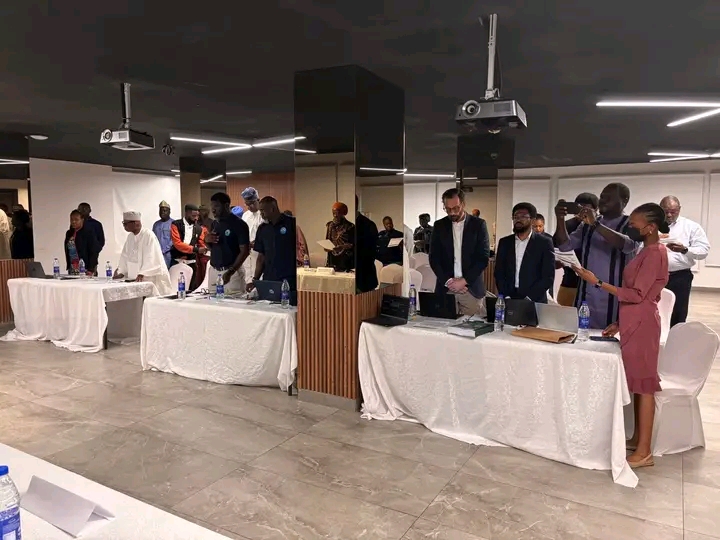
The Lagos Metropolitan Area Transport Authority (LAMATA) convened a critical review workshop on the Draft Environmental and Social Impact Assessment (ESIA) for the 68-kilometre Lagos Rail Mass Transit (LRMT) Green Line, marking a key milestone for the Federal Government–backed project.
Chaired by Mrs. Olufunke Babade and convened by the Federal Ministry of Environment, the workshop highlighted the government’s commitment to ensuring the Green Line meets strict environmental and social safeguards. Representing the Minister of Environment, Mrs. Rofikat Odetoro reaffirmed the Ministry’s support for thorough and transparent environmental due diligence.
The session brought together a broad spectrum of stakeholders, including government agencies, host communities, civil society groups, and traditional and religious leaders along the Lekki–Eti-Osa corridor. Notable participants included Mrs. Akintoye Ruqayyah of the State Ministry of Environment and Water Resources, representatives of the Victoria Island Iru Residents Association (VIIRA), Lekki Estates Residents Association (LERSA), and Mr. Daniel Söderström, Environmental Advisor to Swedfund, sponsor of the ESIA study.
Participants provided extensive feedback on the draft report, with Dr. Adeolu Ojo, Head of Environment, Health and Safety at LAMATA, assuring that stakeholder concerns would be incorporated into the final ESIA. “Your concerns have been noted and will be addressed before the final report is submitted,” he said.
The Green Line, one of seven corridors under the Lagos Rail Mass Transit system, will run from Marina to communities along the Lekki–Ajah axis, terminating at the Lekki Free Zone. The line is expected to alleviate heavy traffic congestion and provide a sustainable, high-capacity, low-carbon mobility option for residents and commuters.
The ESIA Review Workshop is a mandatory step in the approval process, designed to ensure the project is implemented in a manner that minimizes environmental risks while maximizing social and economic benefits for affected communities.