


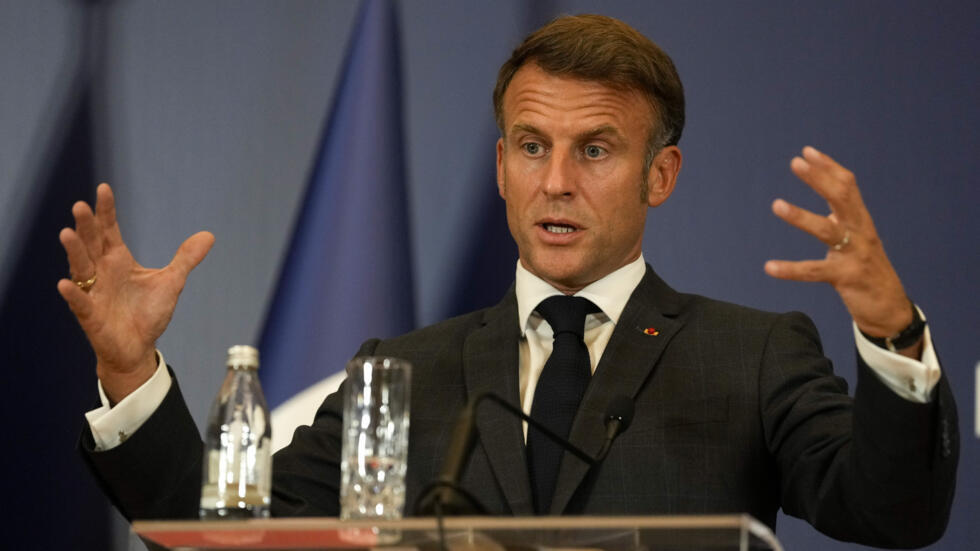
President Emmanuel Macron is expected to name a new prime minister imminently, nearly two months after France’s legislative elections left the country in political stalemate. An announcement could come as early as Wednesday evening, sources close to the president have revealed.
While speculation has been rife, the identity of the new head of government remains unclear. Xavier Bertrand, a former conservative minister, has emerged as the frontrunner. However, Macron has also reportedly explored the possibility of reinstating former Socialist prime minister Bernard Cazeneuve, according to multiple sources.
In a surprising twist, David Lisnard, the right-wing mayor of Cannes, was introduced as a potential contender on Wednesday, adding further intrigue to the selection process.
A source close to Macron told AFP that announcing the new prime minister on Wednesday was “the objective,” confirming that Bertrand and Cazeneuve were still in the running. Whoever is selected will face significant challenges, as both the left-wing bloc and the far-right National Rally (RN) are expected to push for a no-confidence vote.
Lisnard is perceived as more acceptable to the RN, which now holds the largest number of seats in parliament after the elections. Bertrand, on the other hand, has built a reputation as a conservative leader, serving under Presidents Jacques Chirac and Nicolas Sarkozy, and has twice held off the RN’s advance in his northern Hauts-de-France region.
Macron’s decision is pressured by the looming October 1 deadline for submitting a draft 2025 budget for France’s strained public finances. His choice of prime minister will also signal how he plans to address the backlash against his policies, particularly the controversial increase in the official retirement age.
After a snap election on July 7 deprived Macron of his parliamentary majority, the president has delayed the appointment of a new prime minister, an unprecedented move since World War II. This period has stretched through the summer and the high-profile Olympic Games, which Macron had hoped to capitalize on.
The recent elections saw the far-right National Rally and a left-wing coalition rise as the largest political forces in the National Assembly, leaving Macron’s centrist faction in a weakened position.


