







By Ayomide Otitoju
MAGGI, Nigeria’s leading seasoning brand from Nestlé, has announced the successful completion of its Regenerative Agriculture (RegenAg) pilot program for local soybean sourcing — a milestone that has set the stage for a broader initiative supporting 25,000 smallholder farmers across the country.
Launched in 2023 with an investment exceeding ₦100 million, the pilot project empowered 1,030 soybean farmers to adopt climate-smart and soil-restorative practices. Implemented in partnership with TechnoServe and IDH, with technical support from the Centre for No-Till Agriculture (CNTA), Ghana, the program demonstrated the potential of regenerative farming to enhance productivity and sustainability in smallholder agriculture.
The project introduced techniques such as cover cropping, minimal tillage (ripping), crop rotation, and the use of hedgerows—methods that improved soil health and boosted yields.
“Soybean is a key ingredient in MAGGI, and supporting local farmers to grow it sustainably is central to our mission,” said Funmi Osineye, Category Manager for Culinary, Nestlé Nigeria. “This initiative is more than a sourcing strategy; it is an investment in resilient food systems. By equipping farmers, especially women and youth, with regenerative agriculture skills, we are improving productivity today while protecting the land for future generations.”
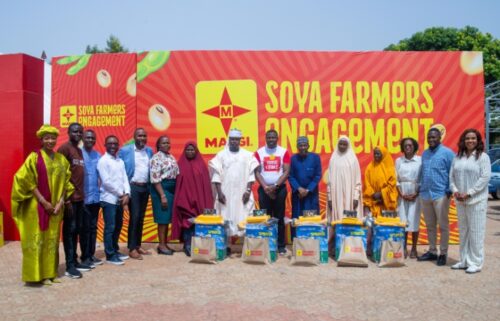
At a celebration marking the pilot’s completion, over 150 stakeholders from the agriculture, development, and industrial sectors gathered to recognize five outstanding farmers who excelled in adopting regenerative practices. One of the awardees, Engineer Lawan Abdul, shared his experience: “Since adopting the practices we were taught through this project, my yields have increased by 100%. This has been very encouraging, and I appreciate MAGGI and the partners for bringing this initiative to us.”
Building on the pilot’s success, Nestlé and the Alliance for a Green Revolution in Africa (AGRA) are now backing an expanded program that aims to reach 25,000 smallholder farmers across Nigeria. The initiative targets the production of at least 80,000 metric tonnes of quality grains annually, with an increasing proportion cultivated through regenerative methods.
“This project shows what is possible when businesses, development partners, and farmers work together,” said Alidu Amadu, Head of Agriculture Services, Nestlé Central & West Africa Region. “Regenerative agriculture not only restores soil health but also builds long-term productivity and resilience in local communities.”
The RegenAg initiative contributes to Nestlé’s global ambition to source 20% of key ingredients through regenerative agricultural methods by 2025 and 50% by 2030, reinforcing its commitment to sustainable food systems and Nigeria’s broader food security goals.