







By Ayomide Otitoju
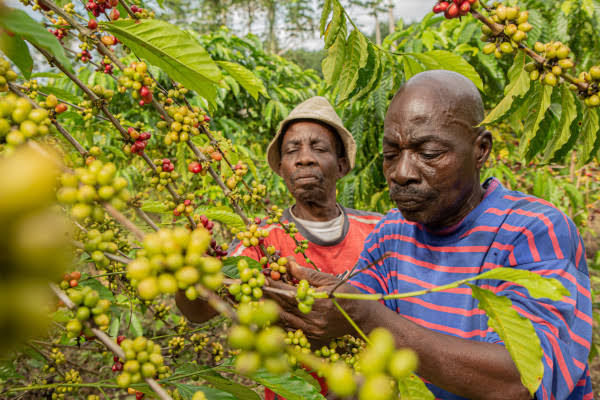
In the quiet village of Gnamagnoa, western Côte d’Ivoire, 65-year-old farmer François Dadi Serikpa tends to his coffee trees with renewed purpose. A former bus driver turned coffee farmer after retirement, Serikpa has found both prosperity and pride through the Nescafé Plan — a global initiative by Nestlé aimed at making coffee farming more sustainable, equitable, and environmentally responsible.
“With the Nescafé Plan, Nestlé agronomists taught us how to care for our soil, plant new varieties, and better manage our plantations,” Serikpa said. “Now my trees are more resistant, and my production has improved. Coffee is our life — it feeds us, clothes us, and gives us hope for the future.”
Serikpa’s story mirrors that of thousands of farmers across Côte d’Ivoire who have benefited from Nestlé’s long-term investment in the country’s coffee value chain.
Reviving a Once-Thriving Industry
Côte d’Ivoire’s tropical climate and fertile soil make it ideal for Robusta coffee cultivation. Yet, production has suffered significant declines over the past two decades — from nearly 380,000 tonnes in 2000 to under 47,000 tonnes in 2023, due to ageing trees, climate pressures, limited financing, and competition from other crops.
Despite the challenges, coffee remains a crucial livelihood for tens of thousands of rural households and an important driver of regional trade in West and Central Africa. Domestic demand is also on the rise, with Ivory Coast’s coffee consumption projected to reach 1.38 million kilograms in 2025, generating $32.13 million in revenue across household and commercial markets.
Building Farmer Resilience
To counter the decline, Nestlé has strengthened its local presence through its Nescafé factory in Abidjan, which has operated for more than 65 years, producing instant coffee from locally sourced beans. The facility employs hundreds of Ivorians and has been recognized by the Ivorian government for excellence in waste reduction, energy efficiency, and responsible operations.
Under the Nescafé Plan, Nestlé supports over 21,000 coffee-farming families across Côte d’Ivoire. Farmers receive training from agronomists in sustainable cultivation methods that align with the Common Code for the Coffee Community (4C standards), ensuring production remains fair, traceable, and environmentally sound.
To boost yields, Nestlé provides high-yield Robusta seedlings developed at its Research and Development Centre in Zambakro, in collaboration with the Coffee-Cocoa Council (CCC) and the National Centre for Agricultural Research (CNRA). Through the Farmer Connect programme, Nestlé also sources green coffee directly from farmer cooperatives, improving transparency and farmer incomes.
Promoting Entrepreneurship
Beyond farming, Nestlé is nurturing a new generation of coffee entrepreneurs through its My Own Business initiative, which supports more than 600 urban coffee vendors with training, equipment, and coffee carts or stands. The programme helps young people establish sustainable livelihoods and contribute to local economic growth.
Entrepreneur Kamenan Assanvo, who operates 45 coffee stands in Greater Abidjan, recently received 10 new carts from Nestlé to expand his network. In total, 80 street coffee stands are now run by young entrepreneurs, boosting street commerce and job creation.
Shared Prosperity Through Coffee
“We believe that investing in local farmers and entrepreneurs is essential to building a strong and sustainable coffee industry,” said Mame Pane Sakho, Head of Communications and Public Affairs at Nestlé Côte d’Ivoire. “It’s not just about coffee; it’s about creating a lasting impact in the communities we serve.”
From Serikpa’s thriving plantation in Gnamagnoa to Assanvo’s bustling coffee stands in Abidjan, the Nescafé Plan continues to transform lives — one cup at a time — reinforcing Nestlé’s 65-year legacy of shared growth and sustainable development in Côte d’Ivoire’s coffee sector.