


By Ayomide Otitoju
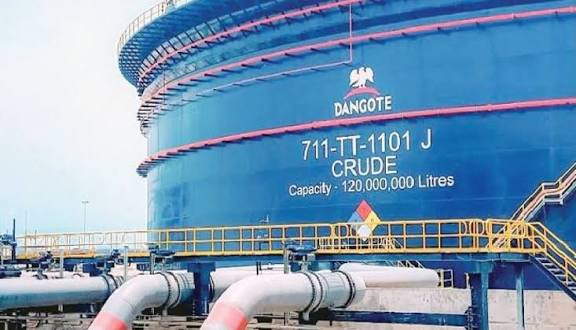
The Nigerian National Petroleum Company Limited (NNPCL) has been accused of diverting ₦2.68 trillion and $9.77 million between 2017 and 2021, according to findings from the Auditor-General of the Federation. The alleged infractions, outlined in the Auditor-General’s annual reports submitted to the National Assembly, highlight violations of Nigeria’s Constitution and the Financial Regulations Act of 2009.
The audit reports reveal that the funds were diverted through unauthorized deductions, incomplete disclosures of crude oil allocations, and discrepancies in revenue remittances. In 2017 alone, ₦1.33 trillion was allegedly deducted without approval, while similar patterns of financial mismanagement occurred in subsequent years, totaling ₦681.02 billion in 2019, ₦151.12 billion in 2020, and ₦514 billion in 2021.
Details of Financial Mismanagement
Key infractions highlighted by the Auditor-General include unauthorized deductions from the Federation Account, incomplete reporting of crude oil losses, and unjustified deductions for refinery rehabilitation and operational costs.
In 2017, the NNPCL was accused of withholding ₦1.33 trillion out of ₦2.41 trillion in revenue owed to the Federation Account, violating Section 162(1) of the 1999 Constitution. The following year saw no reported infractions, but by 2019, the oil firm faced allegations of seven major financial discrepancies, including a ₦663 billion shortfall in revenue transfers.
In 2020, the audit found that ₦151 billion in oil royalties had been deducted without justification, purportedly for government priority projects. By 2021, unauthorized deductions of ₦343.64 billion for operational costs and ₦82.95 billion for refinery rehabilitation were uncovered, alongside a ₦3.75 billion shortfall from petrol sales.
Civil Society and Experts React
The findings have drawn widespread criticism from civil society organizations and anti-corruption advocates. Debo Adeniran, Executive Director of the Centre for Anti-Corruption and Open Leadership (CACOL), described the NNPCL as a hub of institutional corruption, accusing powerful interests of shielding the corporation from accountability.
“The NNPCL operates as Nigeria’s most powerful cabal, immune to scrutiny even from anti-corruption agencies. Despite the enactment of the Petroleum Industry Act, transparency remains elusive,” Adeniran said.
Musa Rafsanjani, Executive Director of the Civil Society Legislative Advocacy Centre, placed blame on President Bola Tinubu, the National Assembly, and security agencies for failing to enforce accountability. “The president and lawmakers have a statutory duty to ensure transparency in the NNPCL’s operations. Their inaction enables these infractions to persist,” he said.
Calls for Reform
Both Adeniran and Rafsanjani called for a firmer stance against corruption within the NNPCL, urging the government to dismantle the alleged cartel controlling the corporation. They emphasized the need for stronger internal controls, rigorous oversight by the National Assembly, and enhanced intervention from anti-corruption agencies to restore public trust in Nigeria’s oil sector.
NNPCL’s Legacy of Opacity
The allegations add to the NNPCL’s longstanding reputation for opacity. The World Bank, in its December 2023 Nigeria Development Update, criticized the firm for a lack of transparency in subsidy-related expenditures and revenue remittances. Former Central Bank Governor Sanusi Lamido had also labeled the NNPCL as the “most opaque oil company in the world,” citing issues with forex remittances and undisclosed joint ventures.
As the controversy deepens, stakeholders are demanding immediate reforms to ensure the NNPCL aligns with global best practices in corporate governance and transparency.