







By Ayomide Otitoju
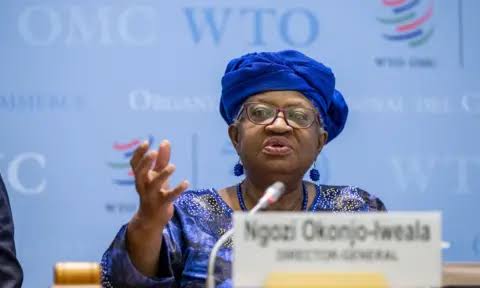
Director-General of the World Trade Organization, Ngozi Okonjo-Iweala, has urged the Federal Government to prioritise the upgrade and maintenance of Nigeria’s airport infrastructure to enhance competitiveness in the global aviation sector.
She gave the advice on Wednesday at the Aircraft Acquisition and Investment Summit in Lagos, stressing that for a country seeking to move up the global value chain, modern and well-maintained airport facilities are “not optional but a prerequisite.”
Okonjo-Iweala called for broader investment across the aviation ecosystem, including the acquisition of new aircraft and improved infrastructure, supported by a strong maintenance culture. She emphasised the need to mobilise private sector financing through public-private partnerships to ease the financial burden on government.
“The model is straightforward—government provides the enabling framework, regulatory certainty, and long-term concession structures, while the private sector brings capital and operational expertise,” she said, noting that such arrangements have driven aviation growth in other parts of the world.
She also urged a review of rising operational costs, including fuel prices, taxes, levies, and airport charges, warning that these could further strain airline operations. According to her, creating a stable and investor-friendly business environment is critical to attracting investment into the sector.
In addition, Okonjo-Iweala advocated for a competitive tax regime, increased market liberalisation, and stronger regional cooperation to remove bilateral restrictions limiting African airlines’ operations. She stressed that the aviation sector should be viewed as a strategic economic enabler rather than merely a source of government revenue.
While noting improvements in Nigeria’s aviation safety record over the past two decades, she called for further progress, including fleet expansion and upgrades by local airlines.
Nigeria’s aviation sector contributes between $1.7 billion and $2.5 billion to GDP, with over 31 airports and 13 scheduled domestic airlines. However, the industry continues to face challenges such as high operating costs, infrastructure deficits, and surging aviation fuel prices.
Recent data show that aviation fuel prices have risen sharply—from about ₦900 per litre in January to over ₦2,500 per litre—driven largely by global market pressures. Fuel costs alone account for about 40 per cent of airlines’ total expenses, making it the single largest cost component in the sector.


