



By Ayomide Otitoju
Police authorities have defended the use of teargas to disperse #FreeNnamdiKanu protesters in Abuja on Monday, saying the action was necessary to protect critical infrastructure and maintain order in the Federal Capital Territory.
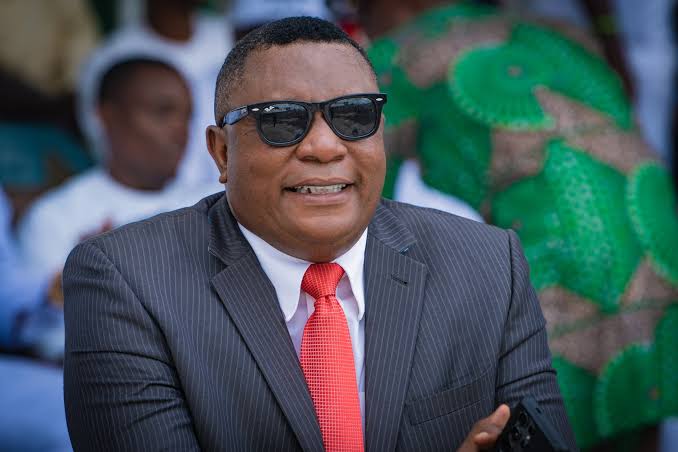
Force Public Relations Officer, ACP Benjamin Hundeyin, made the clarification on Channels Television’s Politics Today, stating that the protest violated a court order restricting demonstrations around high-security zones, including Aso Rock Villa, the National Assembly, Force Headquarters, the Court of Appeal, Eagle Square, and Shehu Shagari Way.
“You see, the FCT is very big. You can protest anywhere and your voices will still be heard,” Hundeyin said. “These are critical infrastructures that must be protected. In the past, protests in these areas led to destruction of property, so it is our duty to maintain law and order. Whatever lawful steps we need to take to achieve that mandate is what we did.”
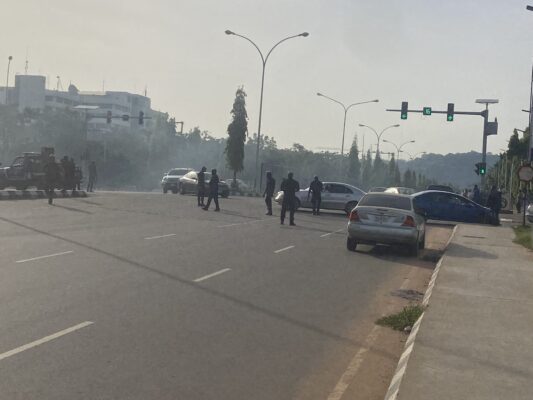
Earlier on Monday, protesters demanding the release of detained IPOB leader Nnamdi Kanu had gathered near the Transcorp Hilton Hotel and other locations in Abuja. Security operatives swiftly moved in, firing teargas to disperse the crowd while blocking access roads to the Federal Secretariat and the Three Arms Zone. A heavy security presence was also observed around Eagle Square and Unity Fountain.
The police had on Sunday warned protesters to comply with the existing court order, but activist and protest leader Omoyele Sowore told Channels Television’s The Morning Brief that the organisers had duly notified authorities ahead of the demonstration.
Sowore alleged that the police used excessive force, claiming that “about 10 trucks arrived just as the protest began” and that “bystanders and some protesters were arrested and forced into police vehicles.”
“We had just started peacefully in front of Transcorp when a large contingent of police, army, and civil defence officers appeared,” he said. “Suddenly, they began firing teargas and even some live bullets. Fortunately, no one was hit, but several people, including Nnamdi Kanu’s brother and lawyer, were arrested and beaten.”
Nnamdi Kanu, leader of the Indigenous People of Biafra (IPOB), was first arrested in 2015 on charges of terrorism and treasonable felony. After being granted bail in 2017, he fled Nigeria following a military raid on his Abia home. He was later re-arrested in 2021 and remains in custody pending trial.


