



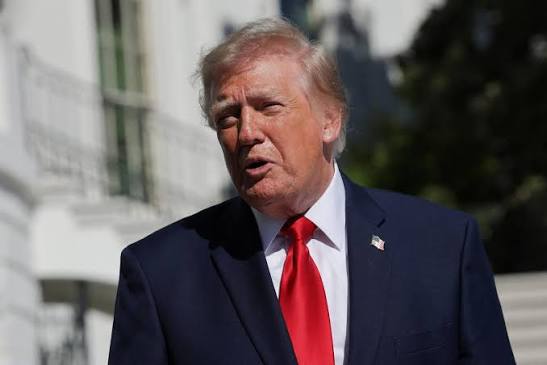

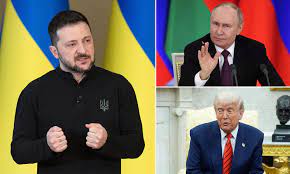
Russian President Vladimir Putin has agreed to halt attacks on Ukraine’s energy infrastructure following a phone call with former U.S. President Donald Trump, but rejected an immediate full ceasefire, insisting that the West must halt all military aid to Kyiv.
The two leaders spoke for more than 90 minutes on Tuesday, expressing hopes of improving strained U.S.-Russia relations. However, the conversation failed to yield a breakthrough, as Putin refused to accept Washington’s proposed 30-day ceasefire, which Ukraine had already endorsed.
Ukrainian President Volodymyr Zelensky welcomed the energy truce but said Putin’s reluctance to agree to a broader ceasefire indicated Moscow’s intent to weaken Ukraine further.
Trump, on his Truth Social platform, claimed there was an “understanding” to work towards a complete ceasefire and an ultimate end to the war. However, the Kremlin emphasized that any full truce would depend on conditions Ukraine and its Western allies would find difficult to accept.
A Kremlin statement confirmed Putin’s agreement to a temporary pause on energy strikes and stated that the order had already been issued to the Russian military. The White House also acknowledged that the first step towards peace would begin with an energy and infrastructure ceasefire.
Russia has been targeting Ukraine’s energy infrastructure throughout the winter, while Ukraine has retaliated with drone strikes on Russian oil facilities.
Trump and Putin also agreed to begin broader peace talks immediately, with the White House citing potential benefits for U.S.-Russia relations. However, the Kremlin stressed that a key condition for lasting peace would be the cessation of all Western military and intelligence support to Ukraine.
Just hours after the call, air raid sirens and explosions were reported in Kyiv, suggesting that Russia remained committed to its broader military offensive.
Trump has vowed to end the Ukraine war as part of his election campaign, often blaming his predecessor, Joe Biden, for prolonging the conflict through continued military aid to Kyiv. His direct engagement with Putin has sparked concerns among U.S. allies, with German Chancellor Olaf Scholz and French President Emmanuel Macron reaffirming their commitment to arming Ukraine.
“Ukraine can count on us,” Scholz said, signaling continued Western support despite Trump’s overtures to Moscow.
Meanwhile, European leaders remain cautious about Trump’s diplomatic efforts, wary that he may push for a settlement that favors Russia at Ukraine’s expense. Trump has previously suggested dividing Ukraine’s assets, including land and power plants, as part of a peace deal—an idea widely rejected by Kyiv and its allies.
Despite U.S. efforts to broker a ceasefire, Russia continues to advance in southern and eastern Ukraine, reclaiming lost territories and reinforcing its military positions.
Moscow also accused Ukraine of attempting a ground assault on Russia’s Belgorod region on Tuesday, casting it as an attempt to undermine Trump’s peace efforts.
As diplomatic maneuvering intensifies, the path to a lasting resolution remains uncertain, with Ukraine and its allies unwilling to concede to Putin’s demands while Russia continues its military aggression.


