






By Ayomide Otitoju
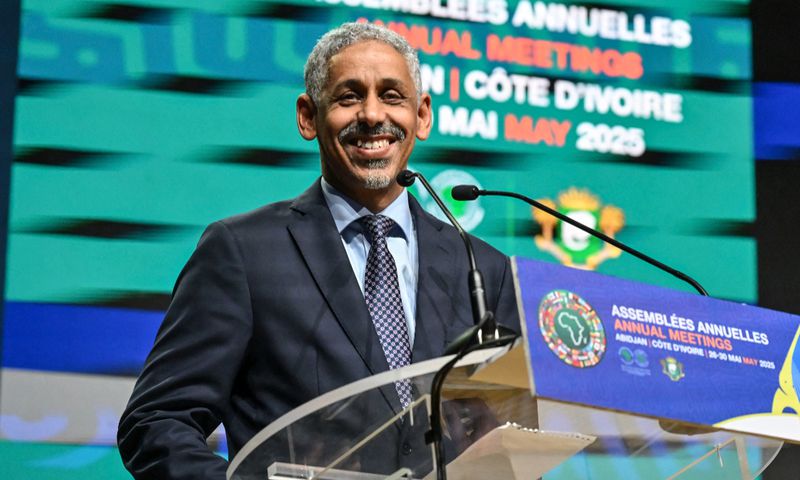
Mauritania’s former economy minister, Dr. Sidi Ould Tah, has been elected as the new President of the African Development Bank (AfDB), succeeding Nigeria’s Akinwumi Adesina. The election was held on Thursday and marks a pivotal leadership transition for one of the continent’s most influential financial institutions.
Tah, 60, emerged victorious after three rounds of voting, securing 76.18% of the votes—well above the required majority from both the 81 member countries and the 54 African nations of the Bank. He notably outpaced competitors Samuel Munzele Maimbo of Zambia, who garnered 20.26%, and Amadou Hott of Senegal, who finished with 3.55%.
Tah also secured 72.37% of African member votes, positioning him as a unifying candidate, particularly with his decade-long experience leading the Arab Bank for Economic Development in Africa (BADEA). His regional credibility could help bridge North and Sub-Saharan Africa in shaping the bank’s strategic vision.
In his campaign, Tah promised to strengthen regional financial institutions, promote Africa’s financial independence, harness demographic growth as a development tool, and invest in climate-resilient infrastructure.
“I wish to congratulate Dr. Sidi Ould Tah on his successful election… The Governors have chosen the leader they believe will best deliver the vision of the Africa we want at this pivotal moment,” said runner-up Samuel Maimbo in a post-election statement.
The transition comes at a challenging time for the AfDB, with the institution facing a potential $500 million funding cut from the United States, following shifts in Washington’s foreign aid priorities.
Outgoing president Akinwumi Adesina, who took six rounds of voting to win in 2015, highlighted the Bank’s achievements under his leadership, including reaching 565 million Africans through development projects. These include Africa’s largest wastewater treatment plant in Egypt, expanded port infrastructure in Togo, energy access projects in Kenya, and cross-border connectivity like the Senegal-Gambia bridge.
During his tenure, the AfDB’s capital base expanded from $93 billion in 2015 to $318 billion in 2024.
Adesina, reflecting on his legacy, said: “We have built a world-class financial institution that will continue to advance Africa’s position within a rapidly changing global development and geopolitical environment.”


