




By Ayomide Otitoju
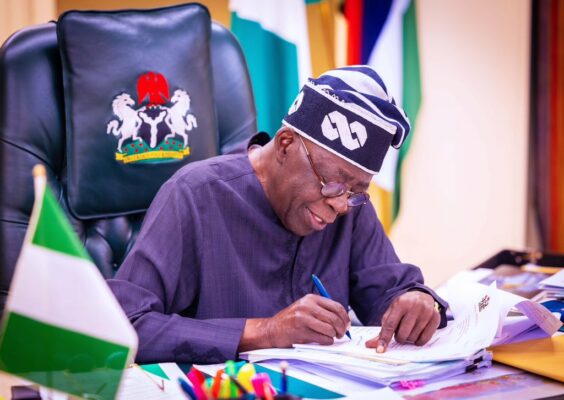
President Bola Tinubu has formally requested the National Assembly to approve a fresh external borrowing plan of N1.767 trillion ($2.209 billion) under the 2024 appropriation act. The president also submitted the Medium-Term Expenditure Framework and Fiscal Strategy Paper (MTEF/FSP) for 2025–2027 and an amendment bill to establish the National Social Investment Programme’s social register as the cornerstone for implementing federal welfare programs.
Rising Foreign Debt Servicing Costs
The request comes as Nigeria grapples with soaring debt servicing obligations. The Central Bank of Nigeria (CBN) reported that the federal government spent $3.58 billion servicing external debt in the first nine months of 2024, a 39.77% increase from $2.56 billion during the same period in 2023.
The CBN data shows a consistent rise in monthly debt servicing costs, with May 2024 recording the highest single-month payment of $854.37 million, a 286.52% increase from $221.05 million in May 2023. The steep increase reflects the mounting burden of Nigeria’s debt obligations amid fluctuating exchange rates and persistent fiscal challenges.
State Governments’ Debt Situation
Meanwhile, the debt profiles of Nigeria’s 36 states and the Federal Capital Territory (FCT) have also escalated. As of June 30, 2024, total subnational debt stood at N11.47 trillion, a 14.57% rise from N10.01 trillion in December 2023, according to the Debt Management Office (DMO).
The increase in debt is attributed to the devaluation of the naira, which plunged from N899.39/$1 in December 2023 to N1,470.19/$1 by June 2024, driving up the naira value of external debt. While external debt for states and the FCT rose from $4.61 billion to $4.89 billion, domestic debt dropped from N5.86 trillion to N4.27 trillion within the same period.
FAAC Dependence and Fiscal Vulnerabilities
The heavy reliance on federal allocations continues to expose states to external shocks. A report by BudgIT revealed that 32 states relied on the Federal Accounts Allocation Committee (FAAC) for at least 55% of their revenue in 2023, with 14 states depending on FAAC for over 70%.
Lagos State emerged as the top revenue-generating state, contributing N1.24 trillion (14.32%) to the total revenue of all 36 states. However, most states remain heavily reliant on oil-related revenues, underscoring their fiscal vulnerability.
Debt Sustainability Concerns
The rising cost of debt servicing, driven by currency devaluation and increased borrowing, has raised concerns about the sustainability of Nigeria’s debt obligations. With subnational governments increasingly turning to loans to finance budgets, stakeholders have called for improved fiscal discipline and diversification of revenue sources to mitigate economic risks.
President Tinubu’s new loan request underscores the urgent need for Nigeria to address its debt challenges while ensuring effective utilization of borrowed funds to foster sustainable development.


