






By Ayomide Otitoju
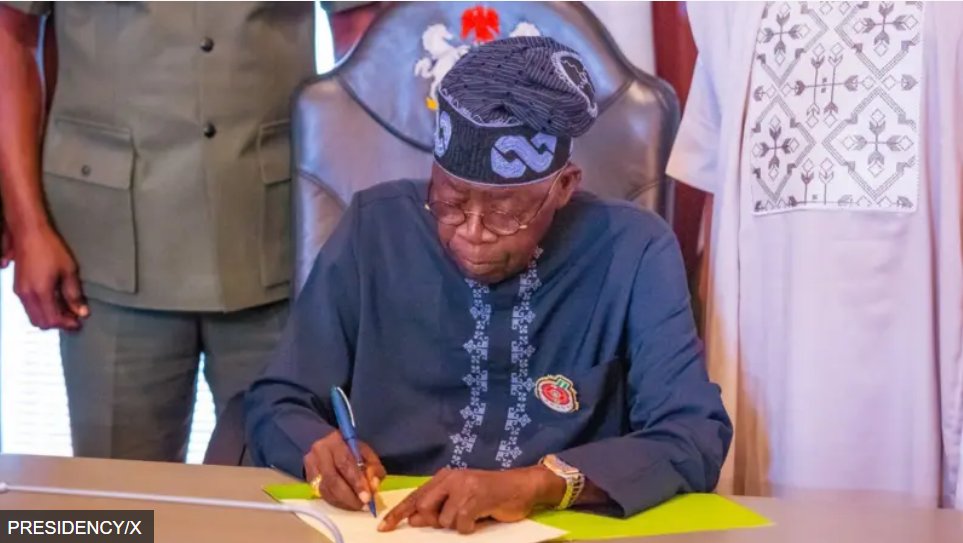
President Bola Tinubu on Wednesday signed the Electoral Act, 2022 (Repeal and Re-Enactment) Bill 2026 into law, following its passage by the National Assembly after months of deliberations.
The signing ceremony took place at the State House, Abuja, in the presence of Senate President Godswill Akpabio, Speaker of the House of Representatives Tajudeen Abbas, and the President’s Chief of Staff, Femi Gbajabiamila, among other top government officials.
Speaking after assenting to the bill, Tinubu said democracy thrives on robust debate and national consensus, stressing the need for Nigerians to have confidence in the electoral system.
He stated that the priority was to manage the electoral process in a manner that eliminates confusion and disenfranchisement, ensuring that democracy continues to flourish.
Addressing the controversy surrounding the transmission of election results, the President noted that while technology plays a role, the final declaration of results remains a human responsibility. He questioned the country’s broadband capacity and technical readiness to fully sustain real-time electronic transmission.
Tinubu emphasised that voting at polling units remains a manual process, with ballots cast, sorted and counted manually, adding that the core issue lies in the transmission of results without glitches or interference.
The legislation has generated intense debate ahead of the 2027 general elections, particularly over provisions relating to electronic transmission of results.
On Tuesday, the Senate passed the bill after a rowdy session triggered by a demand for division on Clause 60 by Senator Enyinnaya Abaribe (ADC, Abia South). The dispute centred on a proviso allowing manual transmission of results in the event of electronic failure.
While 15 opposition senators voted against retaining the proviso, 55 senators supported it, sustaining the clause.
The House of Representatives also witnessed heated exchanges over a motion to rescind its earlier position supporting compulsory real-time electronic transmission of results to the Independent National Electoral Commission’s Result Viewing Portal (IReV).
Despite louder “nays” during a voice vote, Speaker Abbas ruled in favour of the motion, prompting protests from some lawmakers before the House moved into an executive session.
The newly signed law is expected to shape the legal framework for Nigeria’s 2027 general elections.