





By Ayomide Otitoju
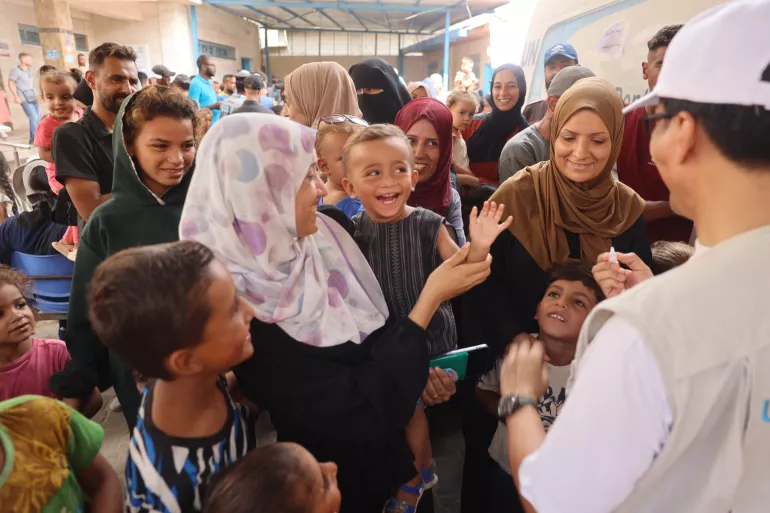
UNICEF, the World Health Organization (WHO), the UN Relief and Works Agency for Palestine Refugees in the Near East (UNRWA), and partners, in collaboration with the Palestinian Ministry of Health, have launched an integrated catch-up campaign aimed at restoring routine immunization, nutrition, and growth monitoring services to 44,000 children cut off from essential healthcare after two years of conflict.
The first phase of the campaign will run from November 9 to 18, providing children with three doses of Pentavalent, Polio, Rota, and Pneumococcal Conjugate vaccines, as well as two doses of the Measles, Mumps, and Rubella (MMR) vaccine. The initiative will unfold in three rounds through January 2026 to ensure full immunization coverage.
According to UNICEF, one in five children under the age of three in Gaza has either missed vaccinations or never received any, putting them at high risk of outbreaks of preventable diseases such as measles, tetanus, and polio. Alongside immunization, UNICEF and its partners will conduct nutrition screenings and provide treatment for moderate and severe malnutrition, with critical cases referred to WHO-supported stabilization centers for inpatient care.
“After two years of relentless violence that claimed the lives of more than 20,000 children in Gaza, we finally have an opportunity to protect those who survived,” said Jonathan Veitch, UNICEF Special Representative in the State of Palestine. “Vaccinating every child and supporting their health and nutrition is not just a humanitarian intervention—it is a moral imperative.”
To support the effort, UNICEF has supplied all 11 essential vaccines, syringes, cold chain equipment, and nutrition materials into Gaza. Vaccination activities will be conducted across 149 health facilities and 10 mobile clinics, involving over 450 trained health workers. Additionally, WHO has trained 149 doctors to detect and report any post-vaccination complications, while both UNICEF and WHO are rehabilitating 35 damaged health facilities to expand service delivery.
“This immunization campaign is a lifeline, protecting children’s health and restoring hope for the future,” said Dr. Richard Peeperkorn, WHO Representative in the occupied Palestinian territory. “It’s a crucial step in rebuilding essential health services for Gaza’s most vulnerable children.”
Before the escalation of conflict, Gaza operated 54 immunization centers and maintained a 98% vaccination coverage rate. Today, with more than half of these facilities damaged or destroyed, coverage has dropped below 70%. The ongoing campaign seeks to restore these levels, especially as the approaching winter heightens the threat of disease outbreaks among children.
Supported financially by Gavi, the Vaccine Alliance, the campaign depends on the continued observance of a ceasefire to allow families, health workers, and humanitarian staff to safely access vaccination sites. UNICEF and WHO emphasized that while this initiative provides a critical emergency response, rebuilding Gaza’s health system will require long-term rehabilitation and sustained donor support.


