



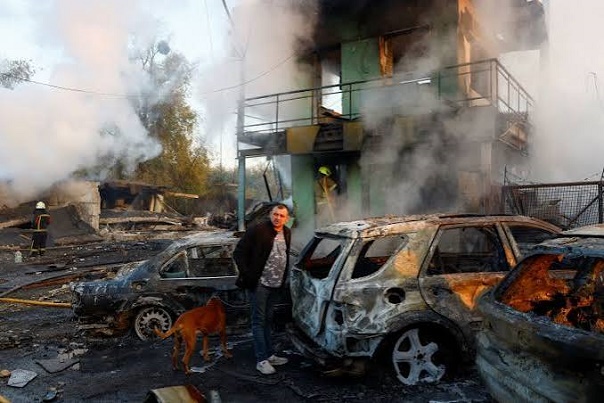
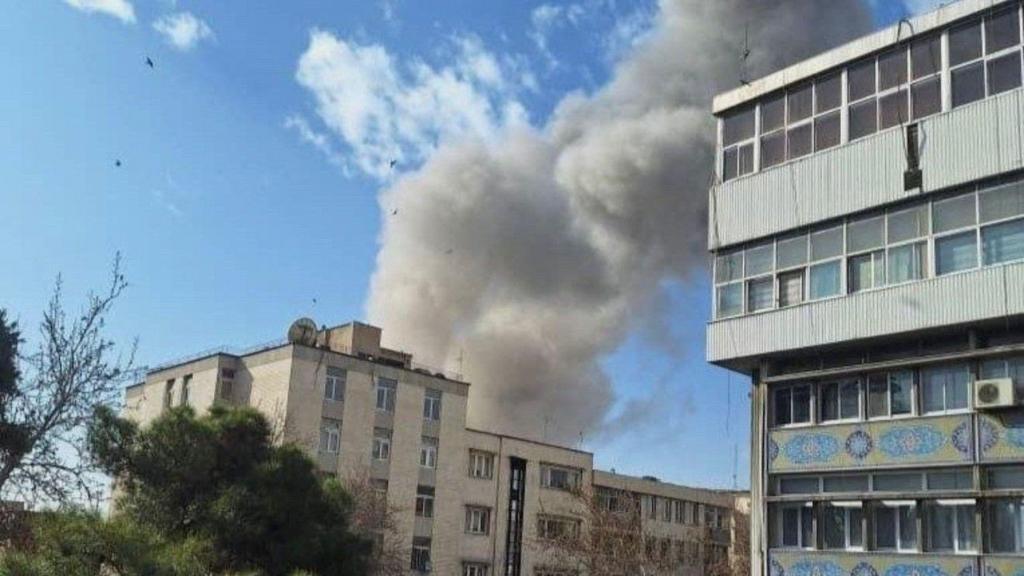
The United States and Israel on Saturday launched major strikes on targets in Iranian cities, triggering explosions and plumes of smoke across the capital, Tehran.
In a video message posted on social media while spending the weekend at his Florida golf club, US President Donald Trump confirmed the offensive.
“The United States’ military began major combat operations in Iran,” Trump said, adding that Washington’s objective was to eliminate what he described as imminent threats.
He vowed to destroy Iran’s missile capabilities and dismantle its missile industry, warning that the country’s navy would also be targeted. Trump offered the Iranian military what he called “immunity” or “certain death” and told the Iranian people that “the hour of your freedom is at hand.”
Iranian state television reported that President Masoud Pezeshkian was “safe and sound,” while the Fars news agency said seven missile impacts were recorded in the Keshvardoost and Pasteur districts of Tehran.
An office worker who spoke to AFP on condition of anonymity said he saw two Tomahawk missiles flying toward their targets. “At first we heard a dull noise and thought it was a fighter jet,” he said.
AFP journalists in Tehran reported hearing multiple blasts and seeing two large columns of smoke rising over the city centre. Iran’s health ministry said ambulances had been deployed, but there was no immediate confirmation of casualties.
As the strikes unfolded, Iran, Iraq and Israel closed their airspace to civilian traffic. The US embassies in Qatar and Bahrain urged American citizens to seek shelter, while sirens sounded in Jerusalem and Israeli authorities issued mobile phone alerts to residents.
The escalation follows days of heightened tensions over Iran’s nuclear and missile programmes. A day after talks between US and Iranian officials in Geneva, Trump said Tehran was “not willing to give us what we have to have.”
However, Oman, which mediated the Geneva discussions, offered a more optimistic assessment. Oman’s Foreign Minister, Badr Albusaidi, said Iran had agreed to zero stockpiling of uranium and to convert existing stockpiles into fuel, potentially resolving disputes over enrichment levels.
Iran’s Foreign Minister, Abbas Araghchi, said progress required “seriousness and realism” from the other side and cautioned against miscalculation and excessive demands.
Meanwhile, US Secretary of State Marco Rubio is expected to travel to Israel on Monday for talks focused on Iran, according to the State Department. In a departure from longstanding practice, he will travel without reporters.
The International Atomic Energy Agency said it would hold technical discussions with Iran on Monday and urged Tehran to cooperate constructively, according to a confidential report seen by AFP.


