







By Ayomide Otitoju
The World Health Organization (WHO) and the Commonwealth Secretariat have renewed their Memorandum of Understanding (MoU) for another four years to strengthen health systems and advance universal health coverage across the Commonwealth’s 56 member countries.
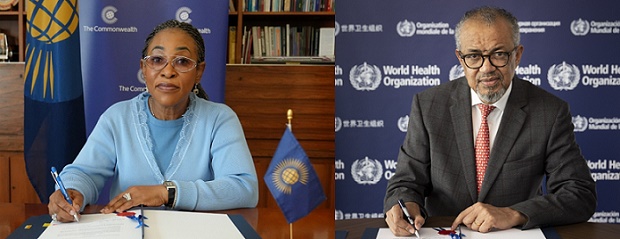
The agreement was signed by Commonwealth Secretary-General, Shirley Botchwey, and WHO Director-General, Dr Tedros Adhanom Ghebreyesus.
The renewed partnership aims to help member countries build stronger, more resilient and equitable health systems while addressing emerging global health challenges.
Under the agreement, the two organisations will focus on four priority areas: strengthening primary healthcare and essential health system capacities, including through digital health and innovation; addressing the underlying causes of ill health through cross-sectoral policies; improving health service coverage and financial protection to reduce health and gender inequalities; and building climate-resilient and sustainable health systems.
The partnership comes as countries face overlapping health emergencies, climate-related threats and persistent inequalities, increasing the need for coordinated international action.
Tedros said the agreement would combine WHO’s technical expertise with the Commonwealth Secretariat’s ability to convene leaders and promote collective action.
“This strategic partnership between WHO and the Commonwealth Secretariat has a dual purpose: to strengthen health systems for the long term while helping countries respond to urgent health threats,” he said.
Botchwey said the renewal reflected the organisations’ determination to translate shared commitments into practical results for people across the Commonwealth.
“Our Commonwealth Strategic Plan places partnerships at the heart of delivery, recognising that no institution can meet today’s complex health and development challenges alone,” she said.
Building on their first MoU, signed in 2022, WHO and the Commonwealth Secretariat will continue high-level advocacy on priority health issues, promote evidence-based policies and strategies, and support vulnerable countries and populations, including Small States.
The organisations said the renewed partnership reaffirmed their commitment to improving health and well-being and reducing inequalities across the Commonwealth.