


By Ayomide Otitojui
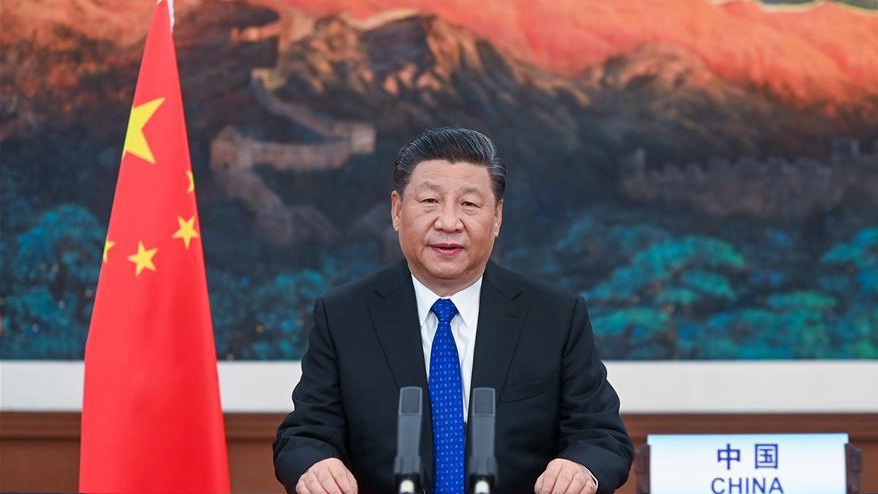
Chinese President Xi Jinping on Thursday committed more than $50 billion in financing for Africa over the next three years, aiming to strengthen cooperation in infrastructure, trade, and other sectors. Xi made the pledge while addressing the largest China-Africa summit since the pandemic, held in Beijing.
The event, attended by over 50 African leaders and United Nations Secretary-General António Guterres, marks a significant step in deepening ties between China and the African continent. African leaders have already secured numerous deals in infrastructure, agriculture, mining, trade, and energy.
Speaking at the summit’s opening ceremony in Beijing’s Great Hall of the People, Xi hailed China-Africa relations as being in their “best period in history.” He emphasized China’s readiness to deepen cooperation in key sectors, including industry and agriculture.
“Over the next three years, the Chinese government is willing to provide financial support amounting to 360 billion yuan ($50.7 billion),” Xi announced. He noted that over half of this sum would come in the form of credit, with $11 billion in various types of assistance and $10 billion through encouraging Chinese firms to invest. He also promised to help create at least one million jobs in Africa.
Xi further pledged $141 million in grants for military assistance, along with training for 6,000 African military personnel and 1,000 law enforcement officers.
UN Secretary-General Guterres, speaking at the event, praised the growing China-Africa relationship, suggesting it could “drive the renewable energy revolution” and pointing to China’s successes in poverty eradication as a model for Africa.
Deals and Cooperation
China, Africa’s largest trading partner, has long sought to tap into the continent’s rich natural resources, such as copper, gold, lithium, and rare earth minerals. The country has provided billions in loans to African nations, which have helped fund vital infrastructure projects but have also raised concerns about mounting debt.
Despite this, the summit saw a series of new pledges for cooperation, particularly in transportation, energy, and agriculture.
Zambian President Hakainde Hichilema announced a deal between Zambia’s state-owned power company ZESCO and China’s PowerChina to expand the use of rooftop solar panels in Zambia. Meanwhile, Nigeria, one of China’s largest debtors in Africa, signed a joint statement with Beijing to deepen cooperation in infrastructure, particularly in transportation, ports, and free trade zones.
Expanding Transport Links
Tanzanian President Samia Suluhu Hassan secured a commitment from Xi to advance a long-delayed railway project connecting Tanzania to Zambia, with media reports indicating China has pledged $1 billion toward the project.
Zimbabwe also received promises for greater cooperation in agriculture, mining, and energy, while Kenyan President William Ruto secured a commitment from China to open up its markets to Kenyan agricultural products. Ruto also obtained pledges to expand Kenya’s Standard Gauge Railway and the Rironi-Mau Summit-Malaba motorway, a project expected to cost $1.2 billion.
Kenya currently owes China more than $8 billion, and Ruto has previously requested a $1 billion loan and debt restructuring to complete stalled projects.


