





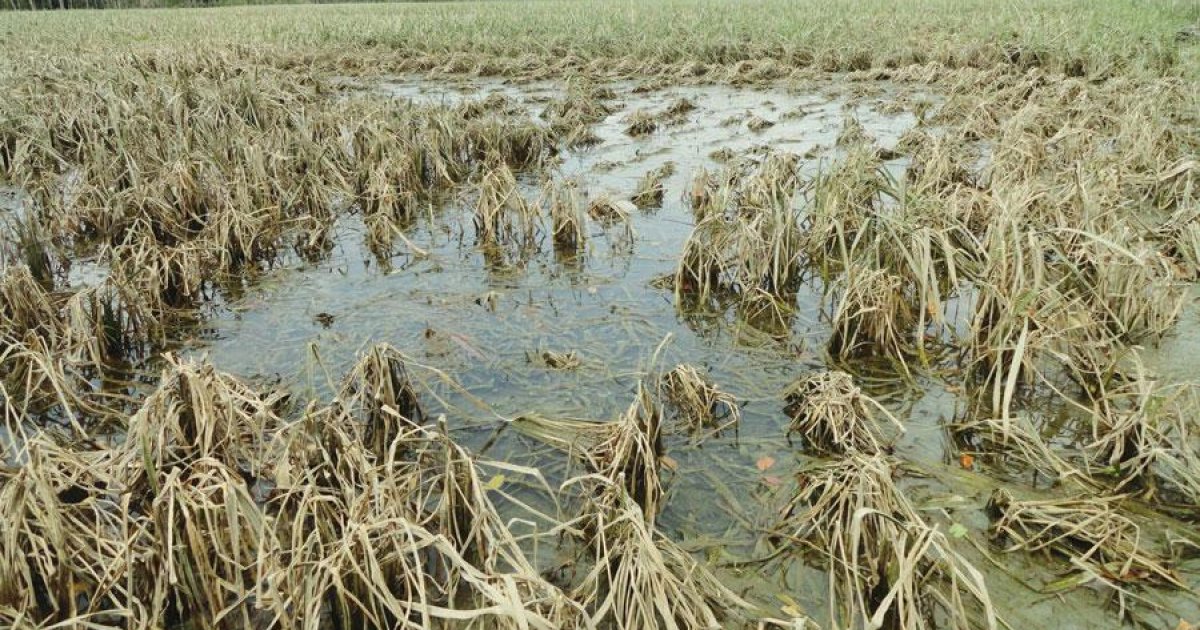
Nigeria’s food crisis deepens as recent data from the National Emergency Operations Center (NEOC) reveals that flooding has devastated approximately 115,265 hectares of farmlands across the country. The hardest-hit states include Bauchi, with 50,343 hectares affected, and Taraba, with 22,182 hectares. Other severely impacted areas are Jigawa, Niger, Sokoto, and several others.
The NEOC report highlights that the flooding has affected 29 states, 154 local government areas, and has displaced 225,169 people. The floods have resulted in 201 fatalities and 2,119 injuries, exacerbating the ongoing food shortages. The National Bureau of Statistics (NBS) has reported food inflation exceeding 40 percent.
Nigerians to Allocate Majority of Income to Food
A recent survey by the Central Bank of Nigeria (CBN) indicates that rising inflation will compel Nigerian households to spend 54.9 percent of their income on food over the next six months. The survey, conducted between July 22 and 26, 2024, reveals that while households plan to cut back on non-essential expenditures, significant portions of their income will be directed towards food, education, transportation, and utilities.
Looting of Warehouses and Food Trucks Escalates
The escalating food crisis has led to widespread looting of warehouses and food trucks in Nigeria’s North-East region. Babagana Bulama, Chairman of the North-East forum of the Department of State Services (DSS), reported that the rising cost of goods has driven criminals to target food supplies. He emphasized that the situation is aggravated by ongoing insecurity and economic sabotage.
Army Deploys Troops to Protect Farmers
In response to the crisis, the Nigerian Army has deployed troops to protect farmers in the North West and North Central regions. This move aims to safeguard agricultural activities and ensure food security amidst the turmoil.
Government Initiatives to Address Food Crisis
The Federal Government has announced several measures to combat the food crisis, including suspending duties and taxes on imports of essential food items such as maize and rice for 150 days. Additionally, the government has approved the procurement of 2,000 tractors and 1,200 trailers and established a committee to find solutions to the food crisis.
Agriculture Minister Promises Bumper Harvest
Abubakar Kyari, Minister of Agriculture and Food Security, assures Nigerians of a bumper harvest expected between October and November 2024. Kyari attributes current food shortages to seasonal factors, reduced landmass, and flooding, while emphasizing the need for increased mechanized farming.
The minister highlighted ongoing efforts to boost food production, including the distribution of fertilizers and the acquisition of new agricultural equipment, to address the challenges facing the sector.


