





By Ayomide Otitoju
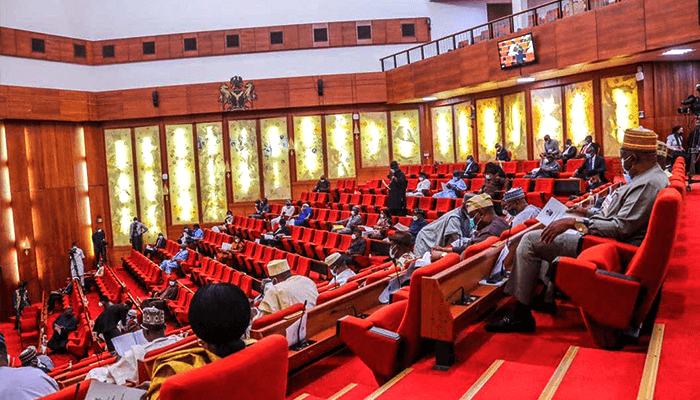
The Senate has approved the 2024–2026 Medium-Term Expenditure Framework (MTEF) and Fiscal Strategy Paper (FSP), setting the stage for the Federal Government’s fiscal operations. The approval followed the presentation of a report by Senator Mohammed Sani Musa, Chairman of the Joint Committees on Finance and National Planning & Economic Affairs.
In addition, the Senate tasked its Committees on Finance, Petroleum, and Gas to investigate claims of financial irregularities by the Nigerian National Petroleum Company (NNPC). These include ₦8.48 trillion in petrol subsidies and $2 billion (₦3.6 trillion) in unpaid taxes, as highlighted by reports from the Nigeria Extractive Industries Transparency Initiative (NEITI) and the Revenue Mobilization, Allocation, and Fiscal Responsibility Commission.
The investigation coincides with the Auditor-General’s confirmation of receiving complete documentation to verify NNPC’s ₦2.7 trillion fuel subsidy claim.
Key Fiscal Projections
The Senate adopted an exchange rate projection of ₦1,400 to the dollar for 2025-2027, subject to review in early 2025 based on monetary and fiscal policy developments. Any excess from this rate will be allocated to debt servicing.
During deliberations, lawmakers called for a reduction in petrol prices, citing the Port Harcourt Refinery’s operational commencement and the Federal Government’s Compressed Natural Gas (CNG) initiative. Senator Olamilekan Adeola noted that these developments could reduce demand for foreign exchange and ease fuel costs for Nigerians.
The Senate also adopted inflation projections of 15.75% for 2025, 14.21% for 2026, and 10.04% for 2027. The proposed 2025 budget outlines ₦47.9 trillion in spending, with ₦34.82 trillion retained revenue and ₦9.22 trillion in domestic and foreign borrowings. Capital expenditure is projected at ₦16.48 trillion, with statutory transfers and sinking funds at ₦4.26 trillion and ₦430.27 billion, respectively.
Calls for Economic Balance
Lawmakers emphasized the need for better support for manufacturing industries to achieve the MTEF’s goals. Senator Yahaya Abdullahi highlighted the importance of addressing the high recurrent-to-capital expenditure ratio and fostering industrial growth.


