








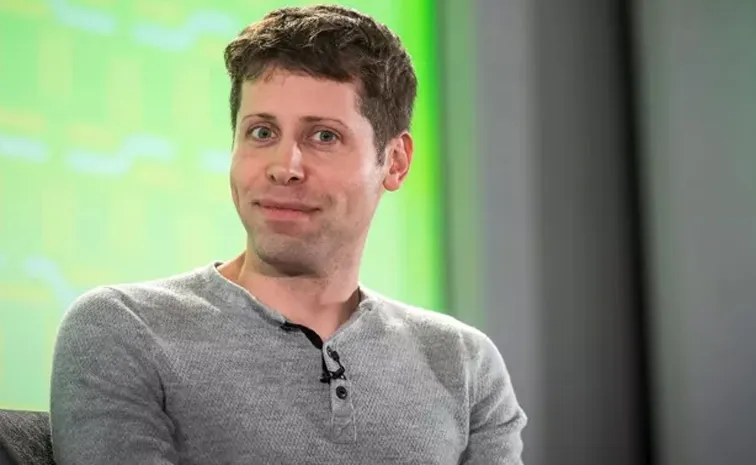
OpenAI CEO Sam Altman signed a partnership deal with South Korean tech conglomerate Kakao on Tuesday as the U.S. artificial intelligence firm seeks to strengthen its global alliances in response to increasing competition from Chinese rival DeepSeek.
Kakao, a dominant player in South Korea’s digital economy with holdings in online banking, ride-hailing, and messaging services, announced that it will integrate ChatGPT into its new AI-driven platforms. The agreement places Kakao within OpenAI’s global alliance, as competition in the artificial intelligence sector continues to escalate.
Strategic Partnership in AI
“We’re excited to bring advanced AI to Kakao’s millions of users and work together to integrate our technology into services that transform how Kakao’s users communicate and connect,” Altman said during the signing.
Kakao CEO Shina Chung expressed enthusiasm for the collaboration, describing it as a “strategic partnership” that will enhance the company’s AI capabilities.
OpenAI’s expansion comes as part of the broader Stargate initiative, a U.S. government-backed drive announced by former President Donald Trump to invest up to $500 billion in AI infrastructure.
Growing Threat from DeepSeek
However, OpenAI faces increasing pressure from DeepSeek, an emerging Chinese AI firm that has reportedly developed high-performance models at a lower cost than its American competitors. The rapid rise of DeepSeek has sent shockwaves through Silicon Valley, with industry analysts calling it a wake-up call for U.S. developers.
During a closed-door meeting with South Korean AI developers, Altman acknowledged the challenges posed by DeepSeek.
“We haven’t found a strategy yet,” he admitted when asked about OpenAI’s response to the rising prominence of open-source AI models like DeepSeek. “There is definitely room for open source, and we want to do more.”
AI expert Kim Jang-hyun, a professor at Sungkyunkwan University, noted that OpenAI appears “highly aware and influenced by DeepSeek’s impact.” He suggested that South Korea, with its tech-savvy and brand-loyal consumer base, could serve as a testing ground for OpenAI before a larger global expansion.
Meetings with Samsung and SK hynix
Altman’s visit to South Korea also included high-level meetings with the country’s top semiconductor manufacturers, Samsung and SK hynix, both of which are crucial suppliers of advanced AI chips.
He met with SK Group Chairman Chey Tae-won and SK hynix CEO Kwak Noh-jung in Seoul to discuss collaboration on AI memory chips, particularly high-bandwidth memory (HBM) technology essential for AI servers.
Later on Tuesday, Altman was expected to hold talks with Samsung Electronics Chairman Lee Jae-yong. Samsung, which has been monitoring the rapid rise of DeepSeek, has stated that it is evaluating “various scenarios” in response to industry shifts.
Concerns Over AI Technology Replication
DeepSeek’s performance has also sparked concerns that Chinese firms may be reverse-engineering U.S. AI models. OpenAI recently warned that Chinese companies are actively attempting to replicate its advanced AI systems, leading to closer cooperation with U.S. authorities.
The company alleges that its rivals are using a process known as distillation, where developers train smaller AI models by copying the behavior and decision-making patterns of larger models, similar to a student learning from a teacher.
However, OpenAI itself faces multiple legal challenges, with accusations of intellectual property violations, particularly regarding its use of copyrighted materials to train generative AI models.
As competition in the AI sector intensifies, OpenAI’s latest partnership with Kakao marks a significant move to expand its footprint in Asia while navigating growing geopolitical and technological challenges.


