




By Ayomide Otitoju
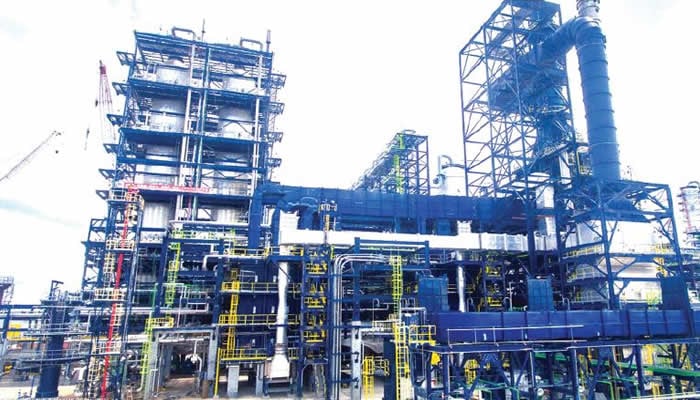
The Chief Executive of the Nigerian Midstream and Downstream Petroleum Regulatory Authority (NMDPRA), Farouk Ahmed, says the 650,000-barrel-per-day Dangote Refinery has begun reshaping Nigeria’s petroleum supply landscape, delivering an average of 20 million litres of fuel daily into the domestic market.
Ahmed disclosed this on Thursday in Lagos during the Association of Energy Correspondents of Nigeria (NAEC) Annual Conference, where he highlighted key initiatives by the Authority to strengthen energy security, attract investment, and stabilise fuel supply across the country.
He described the refinery’s operations as a major step toward achieving domestic refining sufficiency and energy independence.
“Without a shadow of doubt, the operation of the 650,000-barrel-per-day Dangote Refinery has changed the supply dynamics, contributing up to 20 million litres daily, with potential for further ramp-up,” Ahmed said, represented by George Ene-Ita, the NMDPRA spokesperson.
He added that the refinery was ramping up output to help meet Nigeria’s average daily fuel demand of 50 million litres. The refinery has also exported over one billion litres of petrol between June and September to the United States and other markets, marking Nigeria’s re-entry into the global refining space.
Ahmed noted that the development signified Nigeria’s growing refining capacity and demonstrated that the country could now sustain its fuel needs locally. However, he stressed the importance of operationalising a National Strategic Petroleum Stock to cushion against supply disruptions.
“To further strengthen our energy security, we must implement the National Strategic Stock, as provided in the Petroleum Industry Act (PIA) 2021, to serve as a buffer against major supply shocks,” he said.
He explained that the NMDPRA was working with industry stakeholders to finalise the framework for the strategic reserve, while also tightening oversight on storage, depot operations, and product movement to curb adulteration, hoarding, and accidents.
Ahmed reiterated that the Authority remains committed to providing a transparent and investment-friendly regulatory environment, emphasizing accountability, early stakeholder engagement, and predictable rulemaking to restore investor confidence.
Describing the Dangote Refinery as a “symbol of Nigeria’s industrial resurgence,” Ahmed said it was instrumental to fuel sufficiency, job creation, and foreign exchange savings.
He added that NMDPRA’s broader agenda also includes promoting gas utilisation, encouraging investment in liquefied petroleum gas (LPG) and compressed natural gas (CNG), and diversifying Nigeria’s energy mix to support sustainable economic growth.
“With sustained reforms and collaboration, Nigeria can evolve into Africa’s energy hub, backed by strong refining capacity, strategic storage, and regulatory certainty,” he said.
Ahmed urged journalists to balance coverage of the sector by highlighting not just challenges but progress being made in refining and distribution.
“When you tell the Nigerian energy story, don’t just report outages — show the pipelines being welded, the cylinders being filled, and the systems improving lives,” he said, adding that the Authority’s success would be measured by tangible improvements in Nigerians’ daily lives.