







By Ayomide Otitoju
Global oil prices rebounded sharply on Wednesday, climbing about five per cent after slipping to $88 per barrel on Tuesday, according to market data.
Brent crude rose to $92.43 per barrel as of 10:56 a.m. WAT, marking a 5.27 per cent increase. The benchmark had surged above $100 per barrel on Monday as tensions in the Middle East intensified.
The main U.S. crude contract, West Texas Intermediate (WTI), also gained strongly, rising 5.9 per cent to $88.38 per barrel.
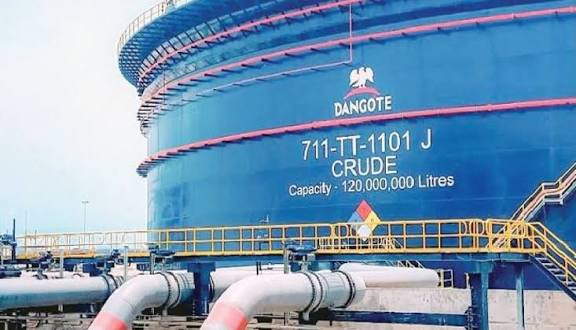
The market volatility comes shortly after the Dangote Petroleum Refinery announced a reduction in the price of Premium Motor Spirit (PMS), commonly known as petrol.
Dangote Group’s Chief Communications Officer, Anthony Chiejina, confirmed on Tuesday that the refinery had cut the gantry price of petrol to ₦1,075 per litre from ₦1,175 per litre the previous week, representing a ₦100 reduction.
According to the company, the price adjustment reflects the recent decline in global crude oil prices.
“As responsible corporate citizens operating in a high-governance code and ethical environment, we believe it is imperative to reduce the price of our products as a reflection of the decline in global crude oil prices,” the company said in a statement.
Dangote Refinery noted that its crude supplies are priced based on global benchmark prices, with an additional premium ranging between $3 and $6, while foreign exchange payments are made at prevailing market rates without subsidies.
It also clarified that crude supplied under the naira-for-crude arrangement is priced using the global benchmark plus a premium before being converted to naira at the current exchange rate.
The refinery reiterated its commitment to strengthening Nigeria’s energy security in line with prevailing economic realities. The reduction marks the first price cut after three consecutive increases that had significantly raised petrol prices in recent weeks.
Earlier, on March 9, the refinery’s Chief Executive Officer, David Bird, said the facility was not insulated from global oil market shocks since it sources crude using international benchmark pricing.
The price adjustment followed a dip in crude prices to around $90 per barrel on Tuesday—the first decline since the outbreak of the Middle East conflict involving the United States, Iran and Israel.
The war has contributed to global oil price volatility, with the surge in crude prices triggering higher petrol costs in Nigeria.
As the conflict entered its second week with no immediate resolution in sight, U.S. President Donald Trump suggested the military campaign was progressing faster than initially anticipated.
“I think the war is very complete, pretty much. They have no navy, no communications, and they’ve got no air force,” Trump told CBS News in a phone interview.
Speaking later at a news conference in Florida, Trump said the conflict could end soon, warning that any renewed escalation would trigger stronger military action.
“It’s going to be ended soon, and if it starts up again, they’ll be hit even harder,” he said, adding that the war could conclude “very soon.”
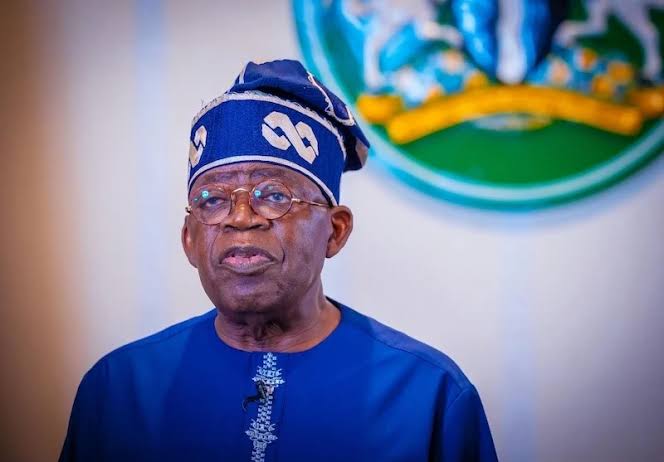
Meanwhile, in response to the rising cost of transportation driven by global energy volatility, President Bola Tinubu has directed the immediate deployment of about 100,000 Compressed Natural Gas (CNG) conversion kits across Nigeria.
The Executive Chairman of the Presidential Initiative on Compressed Natural Gas (Pi-CNG), Ismaeel Ahmed, disclosed this after a meeting with the president at the State House in Abuja.
Ahmed said Tinubu is closely monitoring global developments and their impact on Nigeria’s energy costs, particularly the effect of the Middle East crisis on fuel prices and transportation.
According to him, the president has instructed the Pi-CNG initiative to accelerate the nationwide rollout of CNG infrastructure and alternative mobility solutions.
The conversion kits will enable vehicle owners and tricycle operators to switch their engines from petrol to compressed natural gas, with deployment expected to begin within the next few weeks.