








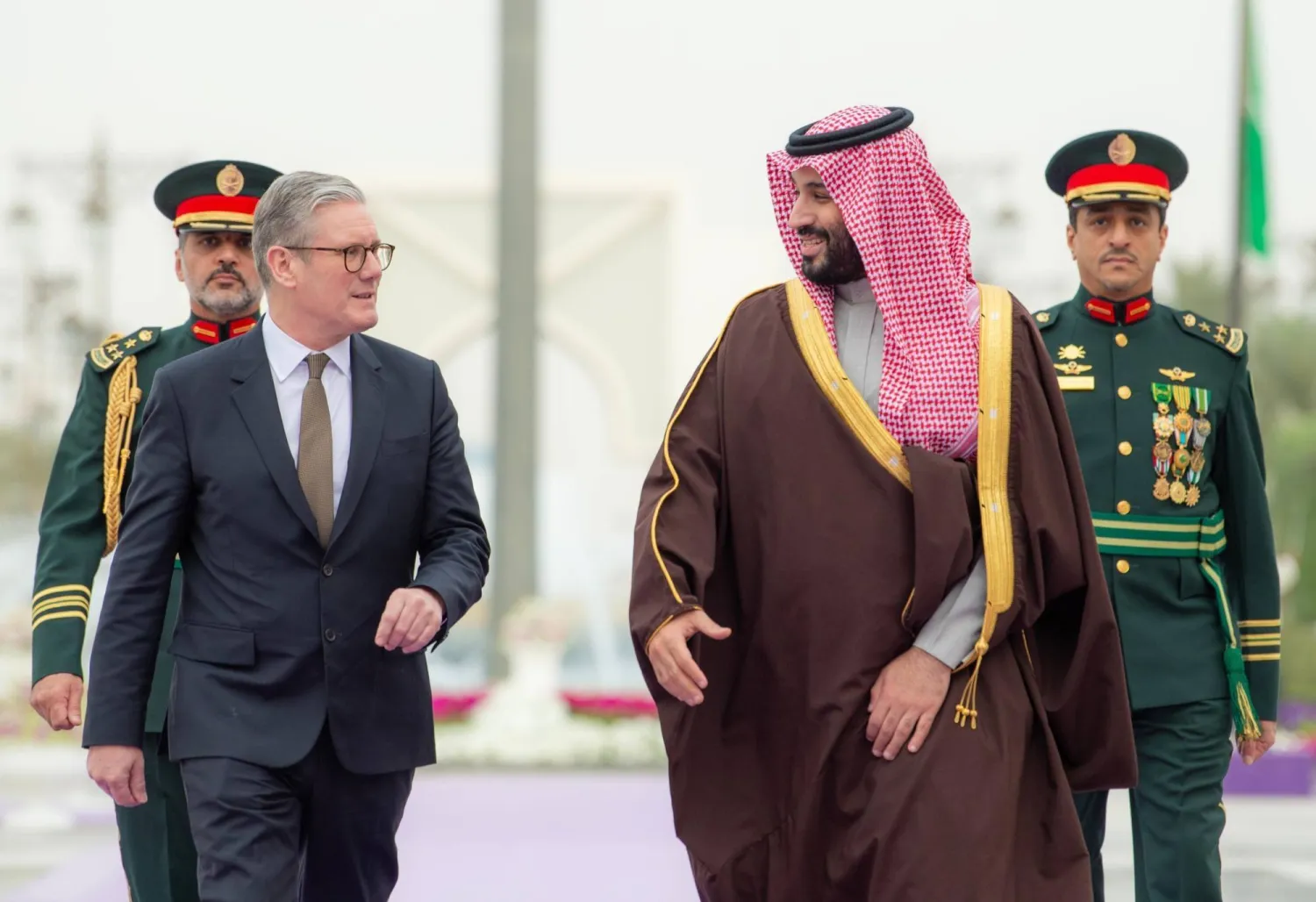
British Prime Minister Keir Starmer arrived in Saudi Arabia on Wednesday, marking the first leg of a Gulf tour aimed at strengthening the ceasefire in the Middle East conflict, according to Downing Street.
During the visit—his first to the region since the outbreak of the U.S.-Israeli war against Iran on February 28—Starmer is expected to meet the kingdom’s de facto leader, Crown Prince Mohammed bin Salman.
Shortly after his arrival was announced, Saudi Arabia’s defence ministry reported intercepting nine drones targeting its territory in recent hours, despite the ceasefire agreed overnight between the United States and Iran. The ministry did not disclose the locations or intended targets of the drones.
Earlier, Starmer welcomed the ceasefire agreement, describing it as a “moment of relief” for both the region and the global community. He stressed the need for sustained international cooperation to transform the truce into a lasting agreement and to reopen the Strait of Hormuz, a critical global shipping route.
In a subsequent joint statement issued alongside leaders from Canada, Japan, and several European countries, Starmer called for urgent diplomatic efforts to end the conflict “within the coming days,” emphasizing that a resolution could only be achieved through dialogue.
The visit follows a virtual meeting hosted by the United Kingdom involving military planners from more than 30 countries, which explored options for securing the Strait of Hormuz in the aftermath of the ceasefire. A separate UK-led diplomatic meeting involving about 40 nations last week also focused on the waterway.
The Strait of Hormuz has remained largely closed since the conflict began, disrupting global supplies of oil, liquefied natural gas, and fertiliser.
Downing Street also disclosed that UK armed forces have intercepted over 110 drone attacks in the region during the hostilities, while the Royal Air Force has conducted more than 1,600 hours of defensive operations.


